Last updated November 23, 2026
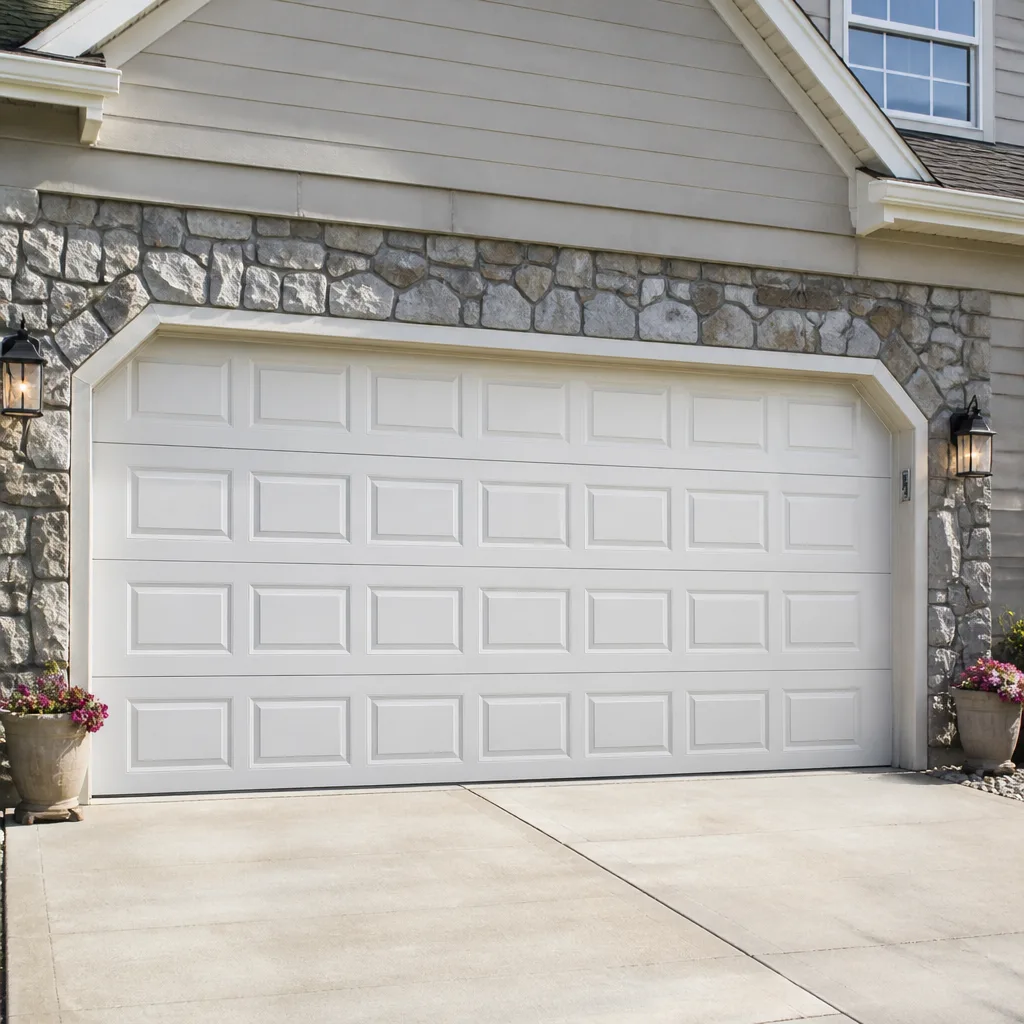 Raised-panel steel
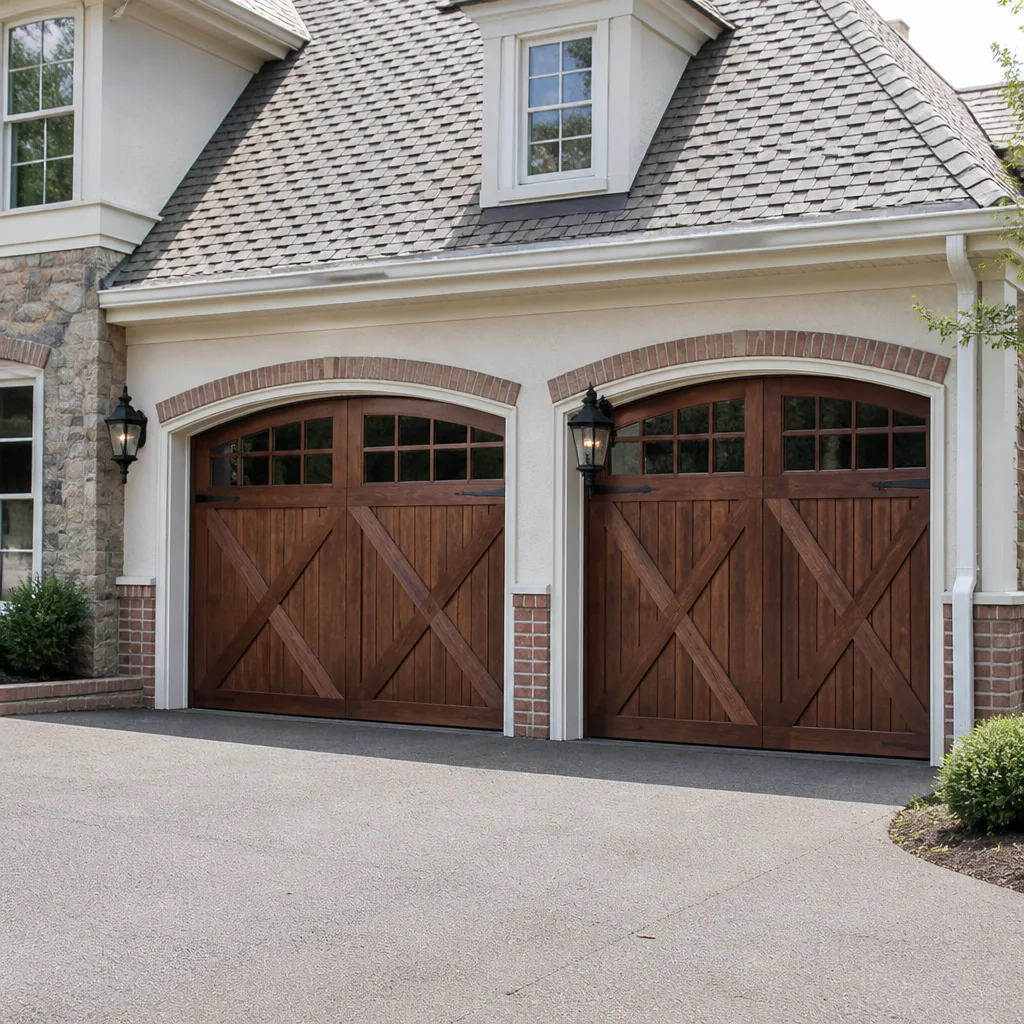 Carriage house
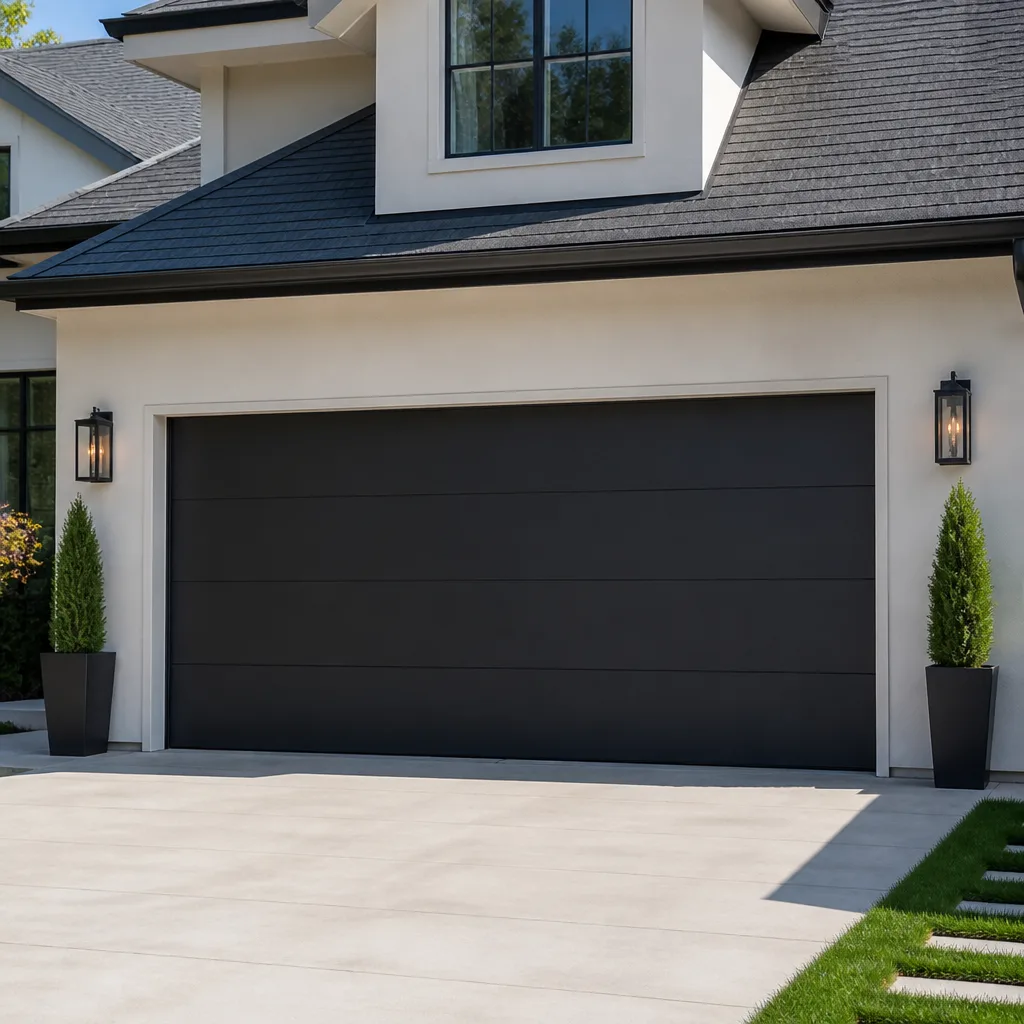 Modern flush
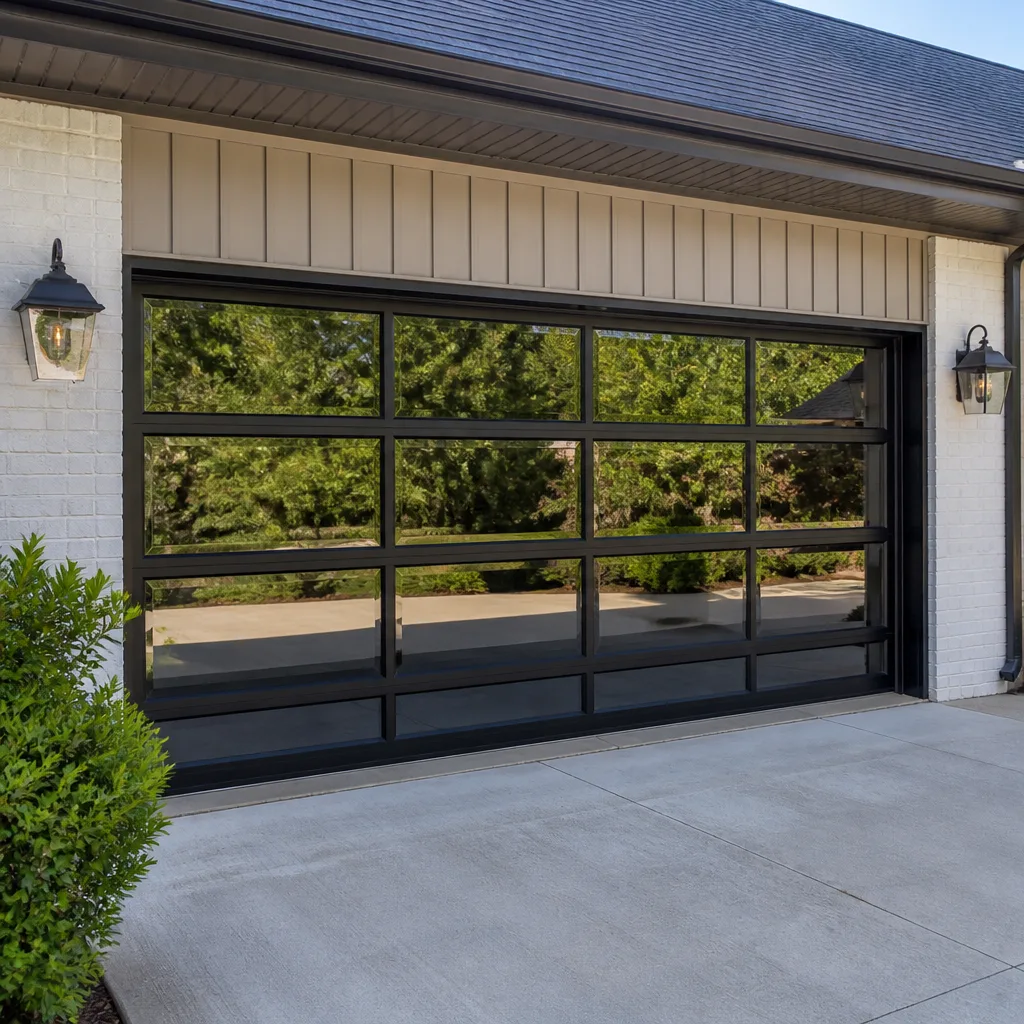 Full-view glass
 LiftMaster openers
 Chamberlain openers
Full 25-point door and opener safety check with every visit - springs, cables, rollers, tracks, and your LiftMaster or Chamberlain opener included
You get a price before we start. It does not change when the pro arrives.
Get your free estimateThe Complete Guide to Garage Doors in Maplewood
Most garage door advice you’ll find online is written for a country that doesn’t actually exist – one where seasons are mild, soil stays put, and a door faces the same conditions in Arizona as it does in Minnesota. Maplewood doesn’t work that way. Between the freeze-thaw cycles that hammer every door and opener here each winter, the clay-heavy ground that shifts under our driveways, and the attached garages that dominate local housing stock, a garage door in Maplewood lives a different life than the generic guides assume. This guide walks the whole lifecycle – choosing, installing, maintaining, repairing, and knowing when to replace – through what actually happens to doors in this city. You’ll finish with a decision tree you can use, not a pile of vague tips.
Quick Answer
A garage door in Maplewood needs three things a national guide won’t tell you: hardware rated for heavy freeze-thaw cycling, torsion springs sized to the door’s actual weight (which changes the moment insulation is added), and a track inspection schedule that accounts for clay-soil settling. Most doors here fail from thermal stress and misalignment, not from being old. Repair first when the problem is a spring, opener, or track; tune up when it’s noise or minor binding; replace when the panels, insulation, or structure have reached the end of their service life and repairs stop paying back.
Styles & brands we work with
- Raised-panel steel
- Carriage house
- Modern flush
- Full-view glass
- LiftMaster openers
- Chamberlain openers
Table of Contents
- Why Maplewood’s Climate Is Hard on Garage Doors
- How Clay Soil and Foundation Movement Throw Tracks Out of Line
- Choosing Insulation and R-Value for an Attached Garage
- The Brands and Product Lines You’ll Actually See in Maplewood
- Spring Sizing, Insulation Upgrades, and a Safety Warning
- Repair, Tune-Up, or Replace: A Decision Tree
- What a Proper Installation Involves Here
- A Seasonal Maintenance Routine That Fits This Climate
Why Maplewood’s Climate Is Hard on Garage Doors
The single biggest thing generic guides miss is thermal cycling. A Maplewood winter swings above and below freezing over and over, and every one of those swings expands and contracts steel panels, aluminum tracks, hinges, and spring steel by a small but measurable amount. Stack dozens of those cycles into a season and you get the wear patterns we see across the city: fasteners that work loose, rollers that develop flat spots, panels that bow slightly at the seams, and springs that fatigue faster than a spec sheet predicts.
That stress doesn’t hit every component equally. Here’s where it concentrates:
- Springs. Torsion and extension springs are under constant tension and are the first to feel repeated thermal expansion. A spring that would last many years in a stable climate often shows fatigue sooner here.
- Tracks and rollers. Metal tracks contract in cold and expand in warmth, and rollers take the brunt of the resulting misalignment. Grinding or jumping is usually a sign the geometry has drifted.
- Weather seals and bottom rubber. The bottom seal takes the most direct freeze-thaw beating, cracking and hardening as it ages, which lets cold air and moisture under the door.
- Openers and lubricants. Cold thickens grease and stiffens moving parts, so an opener that’s marginal in fall can strain or stall in deep winter.
What this means practically is that a Maplewood door benefits from a maintenance rhythm tied to the seasons, not a once-a-year glance. We’ll get to that schedule later. The point for now: if you treat a Maplewood door like a door anywhere else, you’ll be surprised by how fast things wear. Maplewood Garage Door Repair Pros works on these doors every season and knows the failure patterns that show up here specifically.
How Clay Soil and Foundation Movement Throw Tracks Out of Line
Here’s a failure cause that rarely makes it into national guides: ground movement. Much of the soil around Maplewood holds a lot of clay, and clay behaves dramatically differently wet versus dry. It swells when saturated and shrinks as it dries, and that expansion and contraction puts slow, uneven pressure on foundations and garage slabs. Over years, that movement can shift a slab just enough to twist a garage door’s vertical tracks out of plumb – and a door whose tracks are out of alignment will bind, rub, and wear its rollers and hinges prematurely.
The symptoms of soil-driven misalignment tend to sneak up on homeowners:
- A door that closes unevenly, with one side meeting the floor before the other.
- Grinding, scraping, or a rhythmic thump as the door travels.
- Rollers that pop out of the track or a door that seems to “lean.”
- Gaps at one corner of the bottom seal even though the door is fully down.
- A garage floor that has visibly cracked or settled near the door opening.
This is why “just bend the track back” is bad advice here. If the slab or framing has moved, forcing the track back into place without addressing the underlying geometry just buys a few weeks before the problem returns – and a misaligned track is genuinely dangerous because it can derail a door under tension. Track realignment on a settled slab is a job for someone who can assess the whole opening. When alignment problems keep coming back, that’s the signal to bring in a specialist rather than keep adjusting by hand. Our garage door repair service starts with checking whether the movement is in the door or in the structure beneath it.
Choosing Insulation and R-Value for an Attached Garage
Minnesota sits in a cold climate zone, and Maplewood’s attached garages are usually the coldest room in the house for a big chunk of the year. That makes insulation a real priority – not a marketing checkbox. But R-value claims on garage door packaging get confusing fast, so here’s how to think about what actually matters for an attached garage in this climate.
R-value measures resistance to heat flow. Higher is better, but only up to the point where the rest of the assembly – the garage’s walls, ceiling, and the shared wall with the house – is catching up. Pouring money into a very high-R door on an attached garage with an uninsulated ceiling and thin shared wall is like putting a heavy coat over a t-shirt. The door is just one part of the envelope.
What to weigh when comparing doors:
- Insulation type. Polyurethane foam cores generally insulate better per inch than polystyrene (beadboard) panels. A door with a dense foam core and a thermal break between the panels will hold temperature more steadily than a hollow or lightly filled door.
- Panel count and seams. More panels mean more joints that can let air through. A tighter panel interface with proper weatherstripping matters as much as the nominal R-rating.
- The shared wall. If the wall between garage and house is well insulated, a mid-range insulated door is usually the sweet spot. If it isn’t, fix that before you overspend on the door.
- Seals. Bottom rubber, side jambs, and top seals do a lot of the real work in a cold climate. A high-R door with worn seals leaks like an open window.
The honest answer for most Maplewood attached garages is a well-sealed, mid-range polyurethane insulated door – not the highest R-value on the spec sheet, and not an uninsulated shell either. If you’re planning a full swap, our garage door installation service can size the right product to your actual envelope rather than the sales brochure. We’ll come back to why upgrading insulation also means you have to think about your springs.
The Brands and Product Lines You’ll Actually See in Maplewood
Walk any Maplewood subdivision and you’ll see the same handful of brands on the doors and openers. That’s useful to know, because it means a technician who works here regularly can diagnose a failure on day one without guessing at the make. In our experience, the most common doors and openers across Maplewood homes come from Clopay, Amarr, and Wayne Dalton, with openers from LiftMaster, Chamberlain, Genie, and Craftsman also widespread. Raynor shows up too, especially on older or larger doors.
Here’s the general reputation and longevity picture, based on how these products tend to age here rather than on brand advertising:
- Clopay. Common on both builder-grade and upgraded homes. Steel raised-panel styles are typical. They age well when hinges and springs are maintained; the weak points tend to be weather seals and bottom rubber in a cold climate.
- Amarr. Very common in newer Maplewood subdivisions. Solid steel doors that hold up; some models develop panel flex at the seams over many seasons of thermal cycling, so seal condition matters.
- Wayne Dalton. Frequently seen in builder installs. Widely supported and repairable; some older models use extension springs that need closer monitoring than torsion setups.
- Craftsman. Mostly openers rather than doors. Common in the local housing stock and straightforward to service or replace when they strain in cold weather.
Knowing the brand up front saves diagnostic time – and it matters more on openers, where the make and model dictate the parts and controls a technician brings. If your opener is acting up, our garage door opener repair service is set up for the brands Maplewood actually runs. The takeaway for a homeowner: brand-specific familiarity is worth more than a generic “we fix all doors” claim, because it changes what happens in the first ten minutes of the visit.
Spring Sizing, Insulation Upgrades, and a Safety Warning
This is the section most guides skip, and it’s the one that matters most on a couple of counts. Garage door springs are sized to counterbalance the exact weight of the door. Add weight – say, by swapping to a heavier or better-insulated door, or by reinforcing a flimsy door with a strut or extra panels – and the springs that were correct before are now undersized for the load. An undersized spring makes the door feel heavy, strains the opener, and fails sooner. Change the door’s weight, and the springs should be re-evaluated with it. If you’re upgrading insulation, that conversation has to happen.
A serious safety point. Garage door springs and the cables they interact with are high-tension components. A wound torsion spring or a tensioned extension spring stores enough energy to cause severe injury if it releases unexpectedly, and cables can snap under load. Do not attempt to adjust, remove, replace, or “help” a spring or its cables yourself, even if a video makes it look manageable. This is a task for a trained technician with the right tools and containment, and it’s one of the reasons a dedicated spring repair service exists as its own discipline. When a spring lets go, the safest move is to keep people and vehicles clear of the door and call a professional.
What you can do safely is watch for the warning signs: a door that suddenly feels much heavier to lift by hand (on a manual door), a loud bang from the garage, a door that opens just a little and stops, or visible gaps in an extension spring. If any of those show up, treat it as a spring problem and get it looked at before using the door again.
Repair, Tune-Up, or Replace: A Decision Tree
The question we hear most is simpler than it feels: fix it, or replace it? The right answer depends on what’s actually failing. Use this sequence to sort your situation before you call anyone.
- Is it a single failed component? One broken spring, a dead opener motor, a snapped cable, a bent roller. If the door’s panels and structure are otherwise sound, this is a repair. Replacing the whole door to fix a spring is money wasted.
- Is it alignment and wear? Grinding, uneven travel, a loose or derailed track, stiff movement. This is usually tune-up and realignment territory, though on a settled slab it may need a specialist’s assessment of the underlying geometry.
- Is it the door’s structure? Cracked or split panels, a bent or rusted bottom section, a sagging door with a bowed horizontal line. Panel and structural failure is where repair stops making sense.
- Is it chronic? The same problem returning after repair, multiple failing components at once, or a door whose repair costs keep stacking up. Repeated fixes on a door past its service life are a sign to replace.
- Is it efficiency? A cold, drafty uninsulated door on an attached garage, or a door you can’t comfortably use as a daily entry. This is a replacement decision driven by comfort rather than failure.
A rough rule of thumb: prioritize repair when one part has failed and replacement when the door’s body, insulation, or structure has reached the end of its life. Age is a factor, but symptom type is the better guide. A well-built steel door with a single spring failure is a repair job no matter its age. A hollow, drafty door with several failing parts is a replacement candidate even if it still opens. When in doubt, an on-site look settles it quickly.
What a Proper Installation Involves Here
Installation done right in Maplewood means more than hanging a door and bolting on an opener. The freeze-thaw cycling, the clay-soil slab movement, and the attached-garage envelope all shape how a door should go in – and shortcuts taken at install show up two winters later as misalignment and premature wear.
A careful install here generally follows this order:
- Measure the opening and check the slab. Confirm the opening is square and the slab hasn’t settled in a way that will fight the tracks. If it has, note it before anything goes up.
- Match the door to the envelope. Size the door’s construction and insulation to the garage’s walls and shared wall, not to a spec sheet in isolation.
- Set the tracks to the actual reveal. Given how ground movement can shift a slab, tracks should be set with attention to plumb and adjusted for the real floor, not just the nominal opening.
- Size the springs to the finished door weight. This is the step insulation upgrades must not skip. Springs are matched to the door as installed, period.
- Balance the door and set the opener limits. A properly balanced door moves smoothly by hand and closes evenly. The opener’s force and travel limits are then set to the door, not left at defaults.
- Seal it fully. Bottom rubber to the floor, side and top seals snug to the frame. In this climate the seals are half the insulation performance.
We’d add one more: check the grade. Snowmelt and rain have to drain away from the door opening, or the slab and bottom seal take a beating every spring. Getting the details right at install is why garage door installation is its own focused job rather than a sideline. And because installation involves new springs under full tension, the safety warning above applies from the very first turn of the winding bars; it’s not a homeowner task.
A Seasonal Maintenance Routine That Fits This Climate
A little maintenance goes a long way on a Maplewood door because the enemy here is repeated thermal cycling, and lubrication, snug fasteners, and sound seals are exactly what resist it. You don’t need a toolbox full of parts. You need a rhythm.
Before winter (the most important pass):
- Lubricate the rollers, hinges, and spring assemblies with a garage-door lubricant (not heavy grease, which stiffens in cold).
- Check and snug the fasteners on hinges and brackets – thermal cycling works them loose.
- Inspect the bottom seal and side seals for cracking; replace worn rubber before deep cold sets in.
- Test the door’s balance: it should lift smoothly by hand and stay put roughly halfway up. If it fights you, suspect the springs and call a professional rather than adjust them.
- Check the tracks for debris and alignment. Clean, don’t force bent tracks.
After winter:
- Re-check the bottom seal and re-lubricate moving parts, since winter salts and grit accelerate wear.
- Look at the slab and floor line for new cracking or settling near the opening, which can signal alignment trouble ahead.
- Test the opener’s reversal and force settings, especially if the door feels heavier than in fall.
- Watch for a door that no longer closes flush – an early sign that the tracks have drifted with the ground.
Anything involving the springs or cables is off-limits for DIY here, as noted. A twice-yearly pass – one before the cold, one after – catches most of what a Maplewood door throws at you, and it’s far cheaper than dealing with a failure at the worst moment. When something is beyond a quick check, a professional tune-up sorts the geometry and hardware properly.
Common Mistakes to Avoid
- Judging a door by R-value alone. A high-R door with worn seals and a thin shared wall underperforms a mid-range door with tight sealing. Look at the whole envelope, not just the number on the box.
- Upgrading insulation without re-sizing springs. This is the mistake that quietly shortens the life of openers and causes early spring failure. If the door’s weight changes, the springs have to be re-evaluated.
- Ignoring slow misalignment from soil movement. A door that closes a little uneven is easy to live with and expensive to leave alone – in Maplewood’s clay soil it usually gets worse, wearing rollers and hinges the whole time.
- Bending a misaligned track back by hand. Track problems on a settled slab are a symptom, and forcing the track back skips the cause. It can also derail a door under tension.
- Choosing a door for its look and not its climate performance. In this climate a door is part insulation and part weather seal. A stylish door that ignores that ends up costing more in comfort and repairs.
- DIY spring work. The most common and most dangerous mistake. Springs and cables are under high tension and injure people who attempt them. This is a job for a trained technician.
- Replacing the whole door to fix a single part. A dead opener or one broken spring on an otherwise sound door is a repair, not a replacement. Spending on a new door to fix a component wastes money.
See the difference
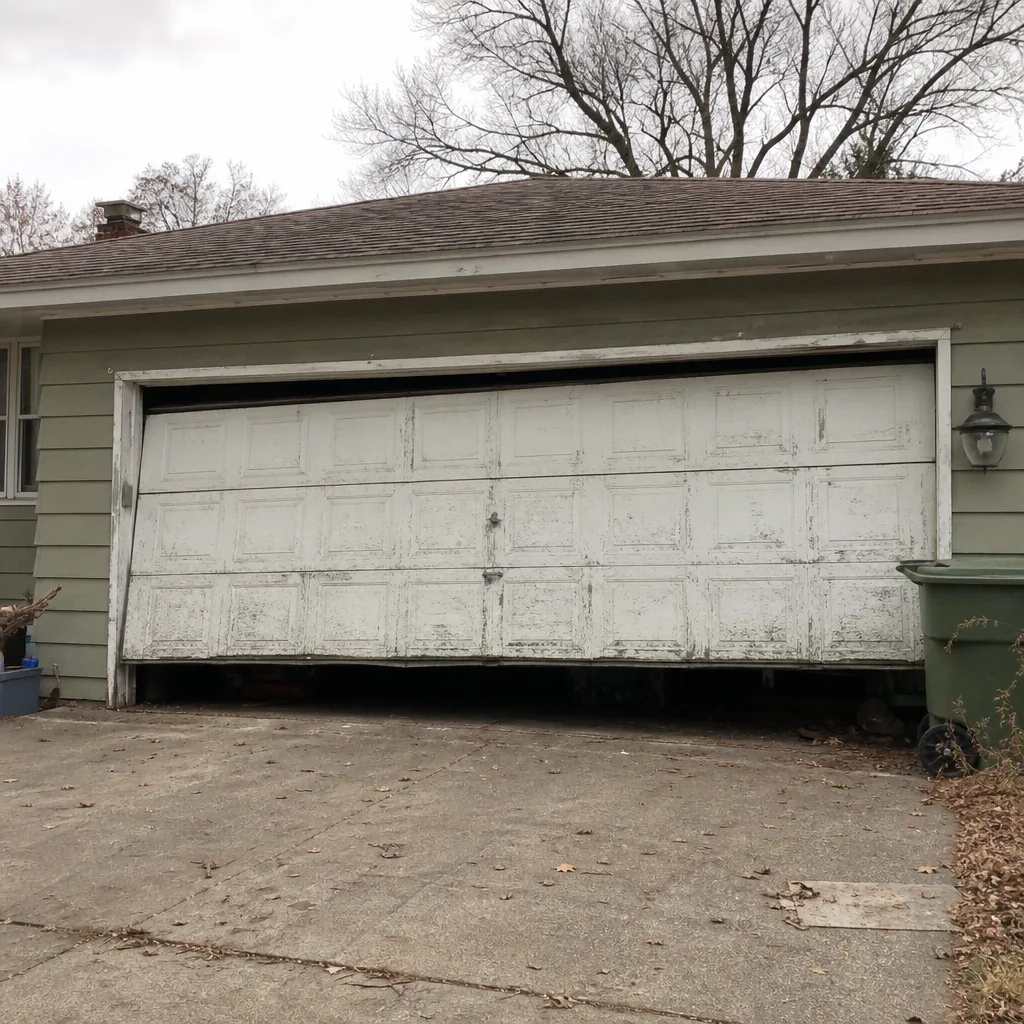 Before
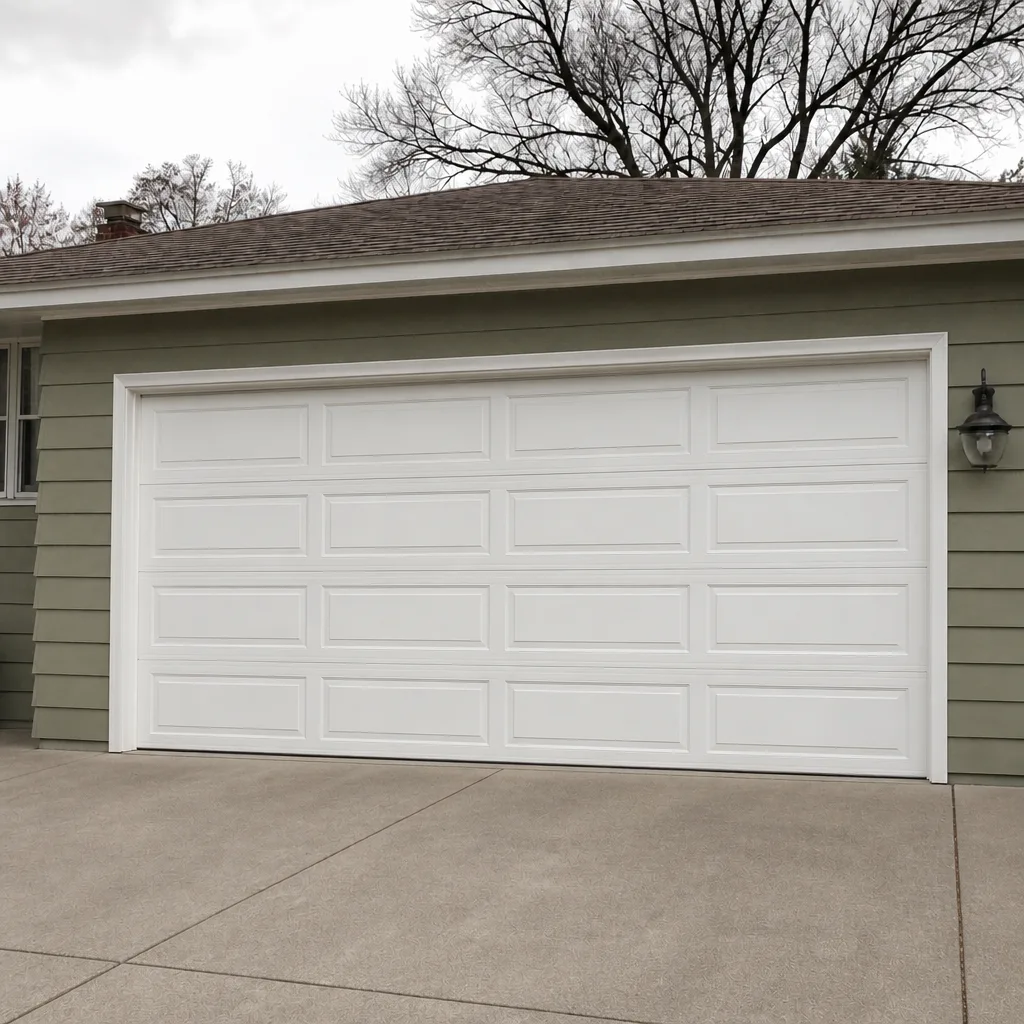 After
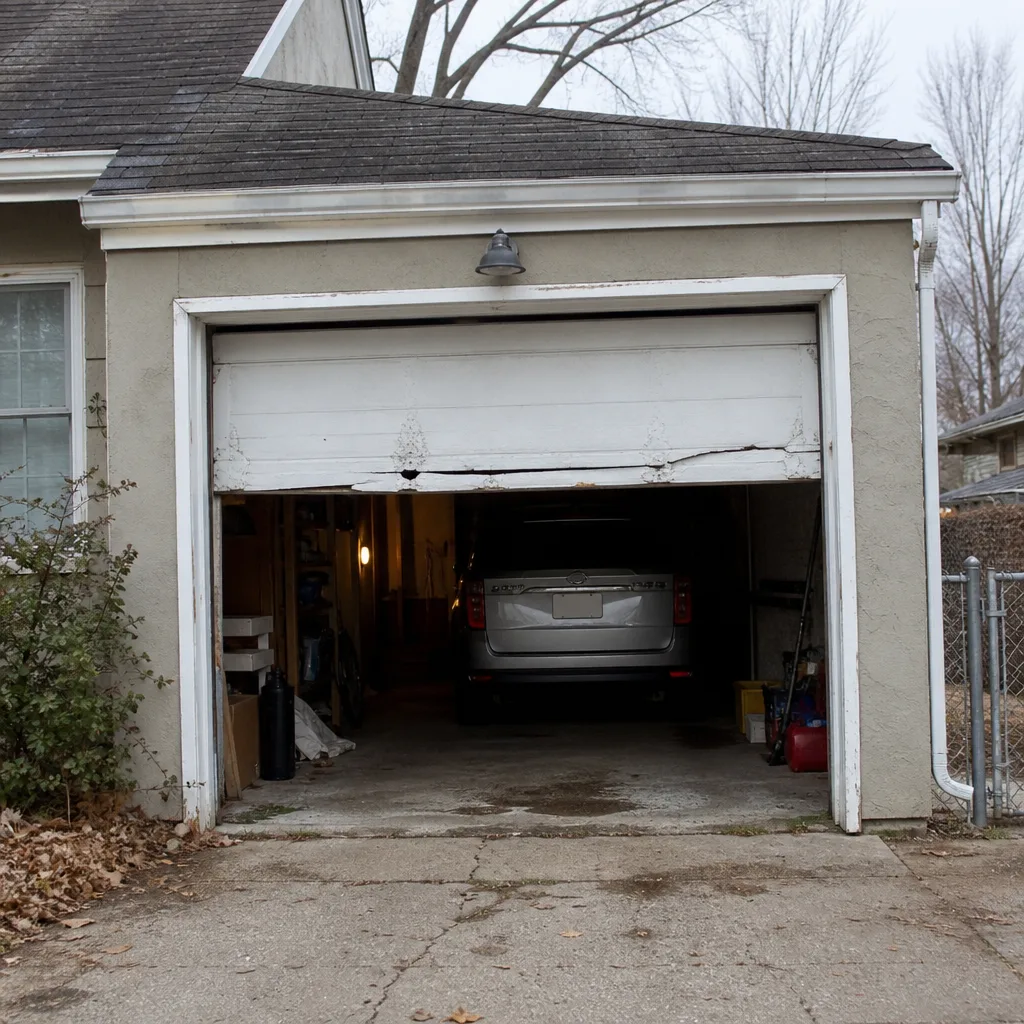 Before
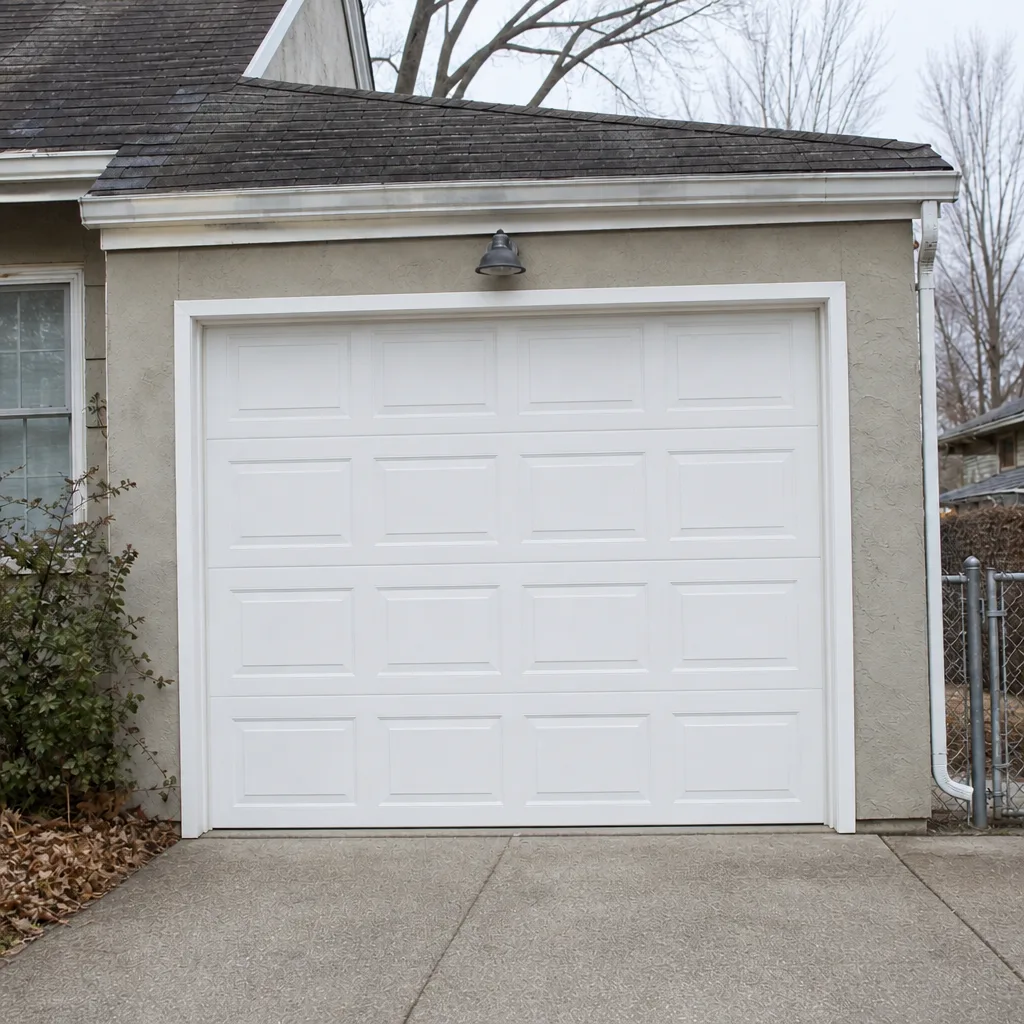 After
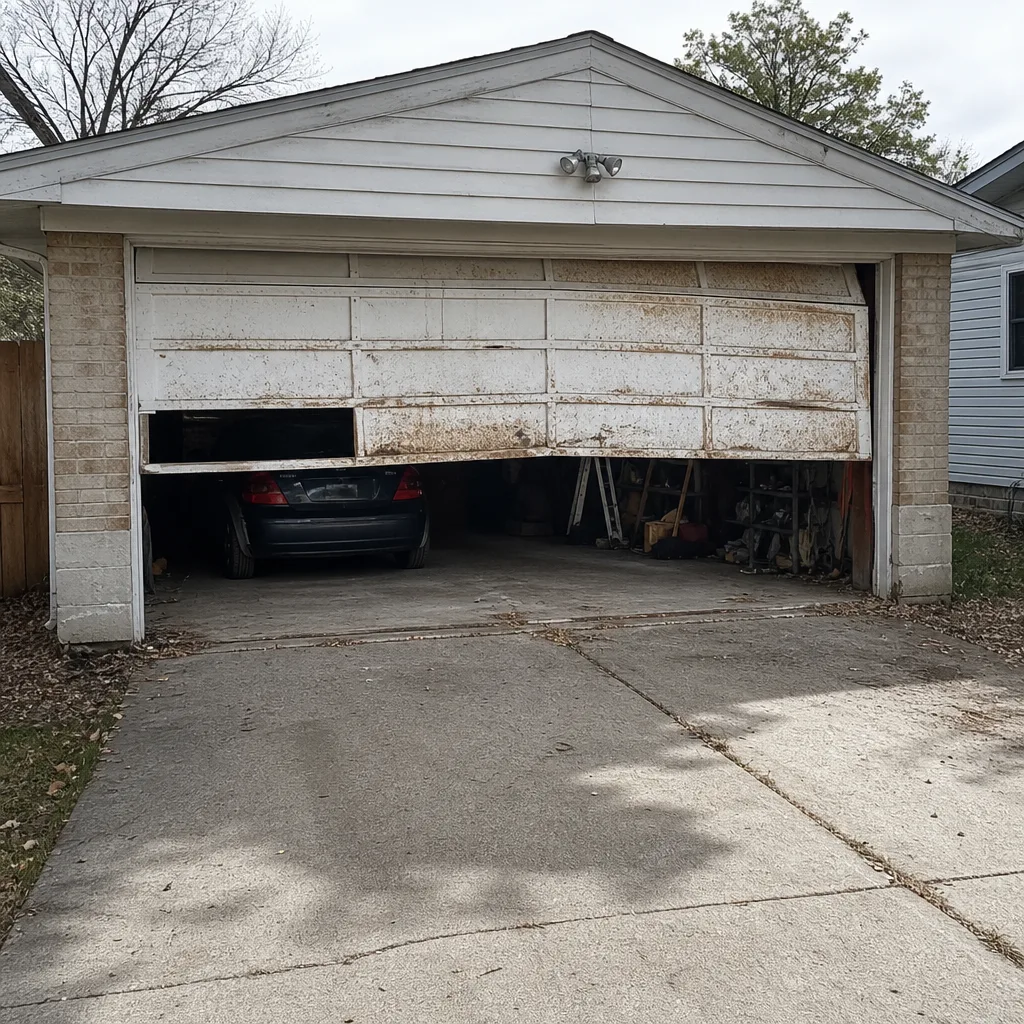 Before
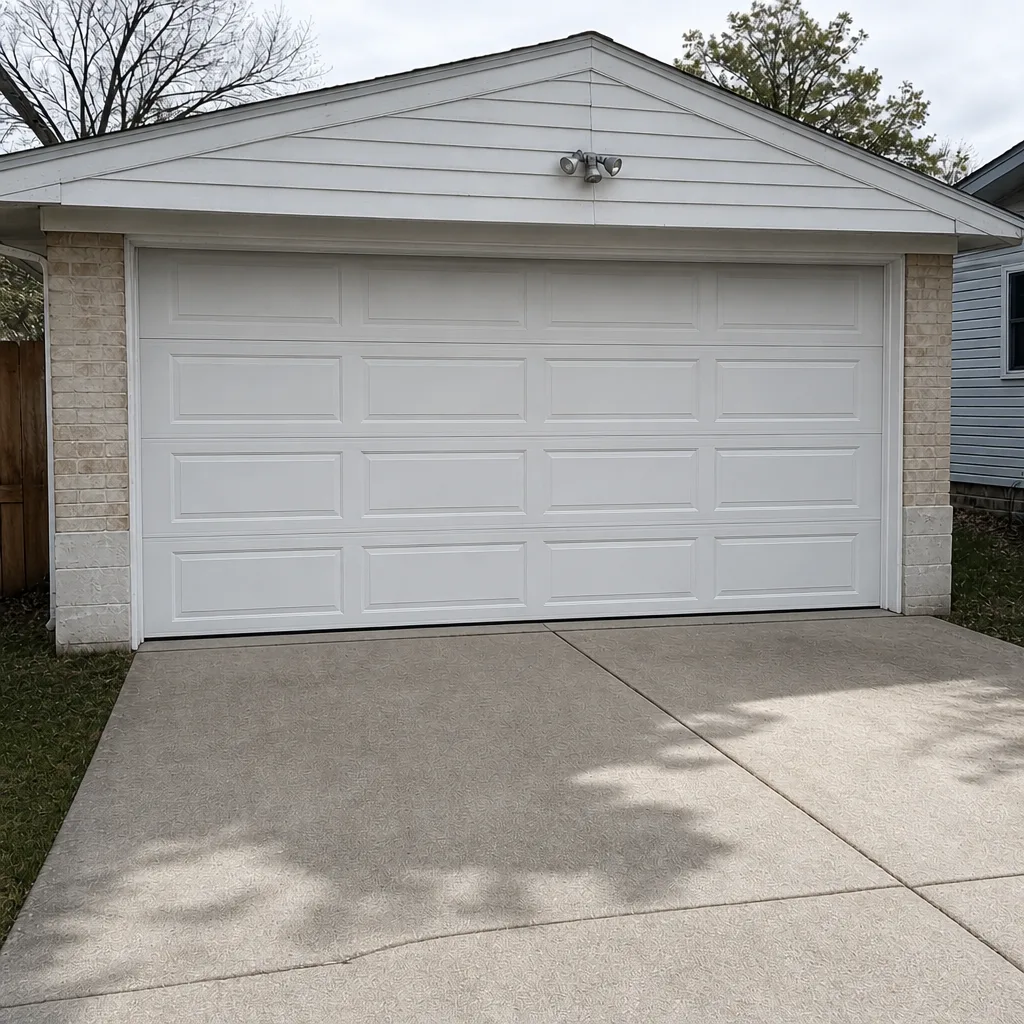 After
When to Call a Professional
Some jobs are a tune-up you can plan; others should get a professional on the phone now. Call when a spring has snapped or the door won’t lift, when a cable has come off or looks slack, when the door is stuck open or trapped a vehicle, or when the opener runs without moving the door. Call when slow misalignment from clay-soil settling keeps coming back, when a recently installed door binds or won’t close flush, or when a door is due for replacement and you want the right product sized to your garage. Anything involving springs or cables belongs here regardless of how minor it looks. Maplewood Garage Door Repair Pros offers free estimates in Maplewood – call (855) 550-7783. Our technicians have up to 9 years of experience and arrive familiar with the brands on your door and opener, so the visit starts with answers rather than guesswork.
Frequently Asked Questions
Because of the repeated freeze-thaw cycling through a Maplewood winter plus clay soil that shifts under garage slabs. Each swing above and below freezing expands and contracts the metal, and slab movement gradually throws tracks and doors out of alignment. Together, those two pressures wear springs, rollers, and hinges faster than in climates with stable temperatures and firm ground.
Pricing depends on the failed part, the door’s make and model, and whether alignment or structural issues are involved, so it’s quoted per job rather than set by a flat rate. The right move is a free on-site estimate that confirms the problem and gives you a written price. Call (855) 550-7783 for an exact quote – estimates are free.
It can, yes. Springs are sized to the exact weight of the door, and a heavier or better-insulated door needs stronger springs to balance it. If the door’s weight changes, the springs should be re-evaluated as part of the upgrade, or the opener and springs will strain and wear early. Have the combination assessed together.
No – don’t attempt it. Garage door springs and the cables they work with are under high tension and can cause severe injury if they release unexpectedly. That risk is why a dedicated spring repair service exists. When a spring fails, keep clear of the door and call a trained technician.
Repair when a single component has failed (a spring, opener, cable, or roller) and the door’s panels and structure are sound. Replace when the panels are cracked or bent, the same problems keep returning, or an uninsulated door is making an attached garage too cold. Symptom type is a better guide than age alone.
It could be either, and in Maplewood it’s often the ground. Clay soil movement can settle a slab and twist the tracks out of plumb, which makes one side reach the floor before the other. A specialist can tell quickly whether the fix is realignment in the door or an adjustment for settled structure. Call (855) 550-7783 and we’ll take a look.
The Bottom Line
A garage door in Maplewood is shaped by this climate and this ground, and understanding that is the whole game. Freeze-thaw cycling wears springs and hardware faster; clay soil quietly pushes tracks out of line; attached garages make insulation a real priority, not a marketing checkbox; and any insulation upgrade means re-checking spring sizing. Use the decision tree – repair for a single failed part, tune up for alignment and wear, replace when structure or insulation has reached the end – and keep a seal-and-lubricate routine twice a year. Above all, leave spring and cable work to a trained technician. Get those basics right and your door will outlast the national average the generic guides assume.
Ready for a free estimate? Call Maplewood Garage Door Repair Pros at (855) 550-7783. Whether your door has a snapped spring, a struggling opener, an alignment problem from settled soil, or you’re planning a full replacement, we’ll tell you what’s actually going on and what it takes to fix it. Our technicians have up to 9 years of experience and know the Maplewood climate and the brands on your door.
Written by the team at Maplewood Garage Door Repair Pros.