Last updated November 23, 2026
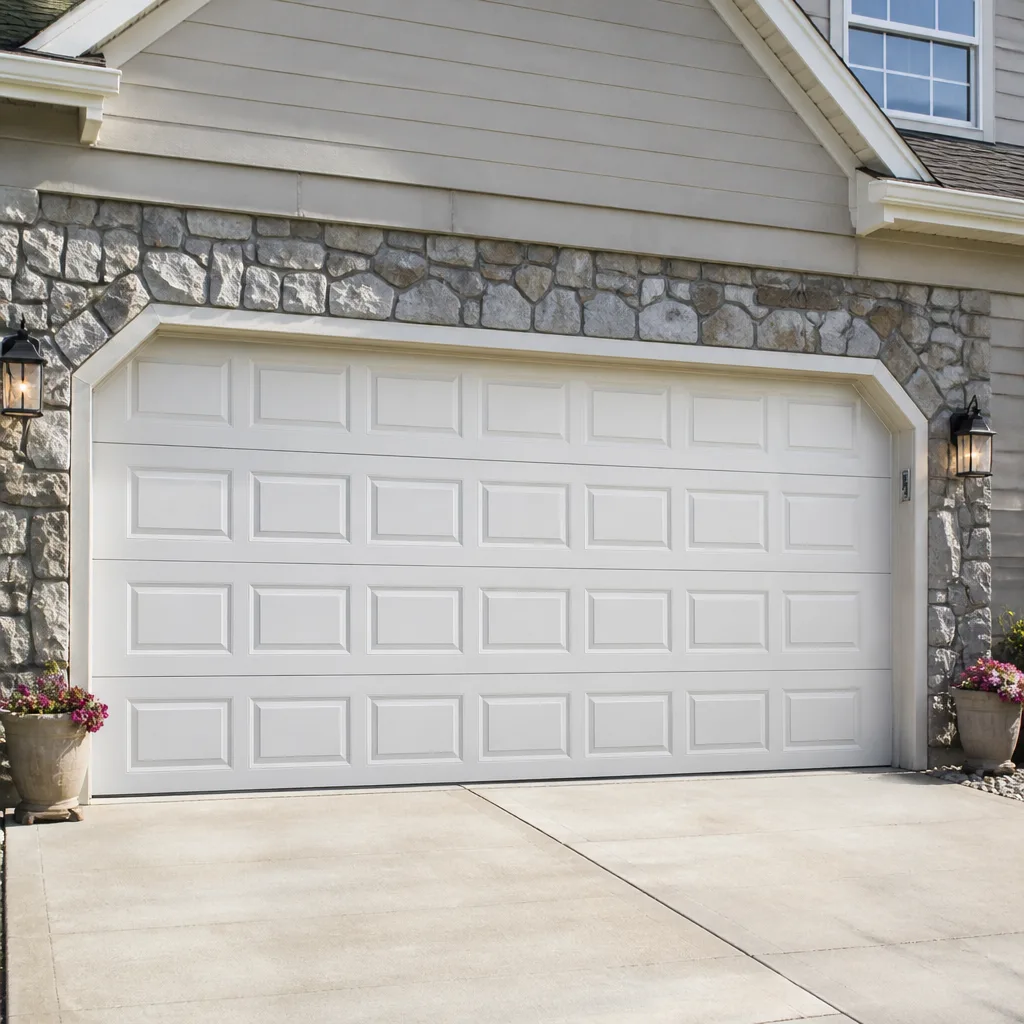 Raised-panel steel
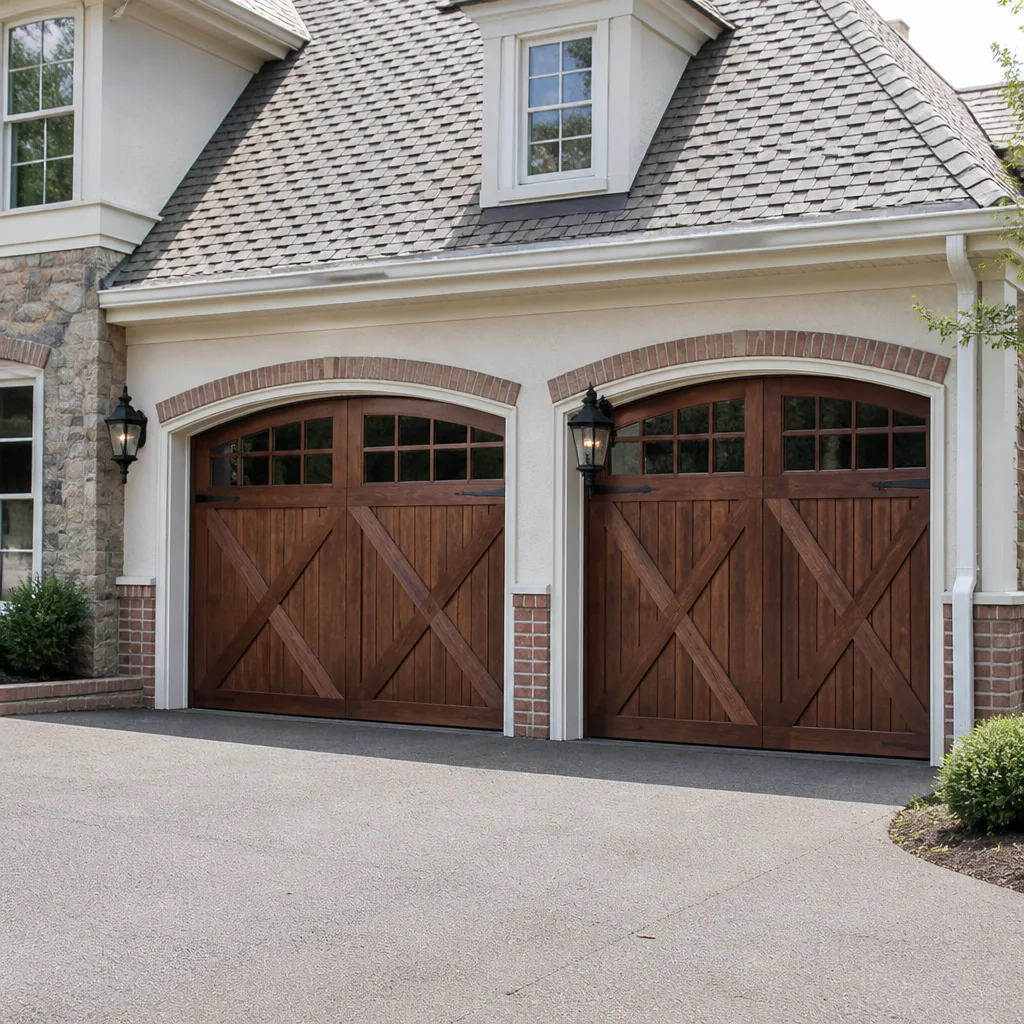 Carriage house
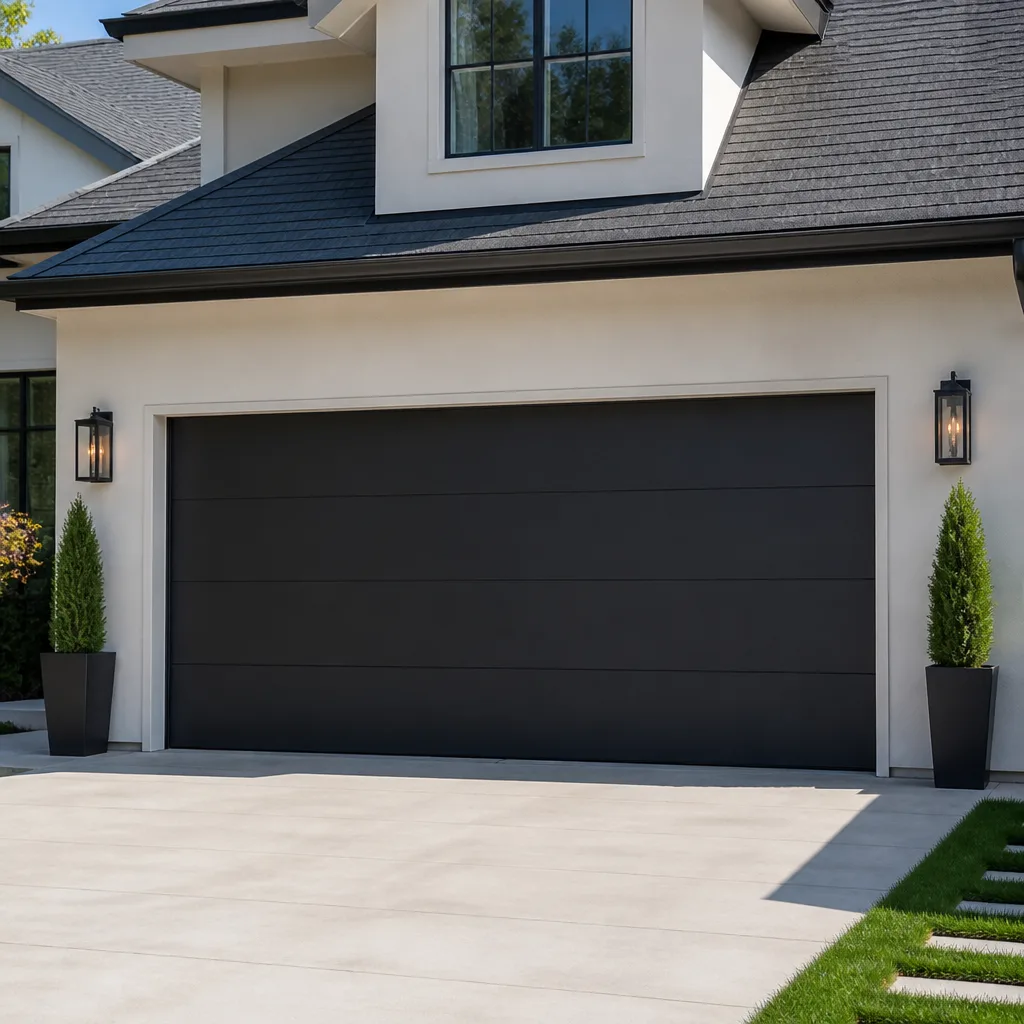 Modern flush
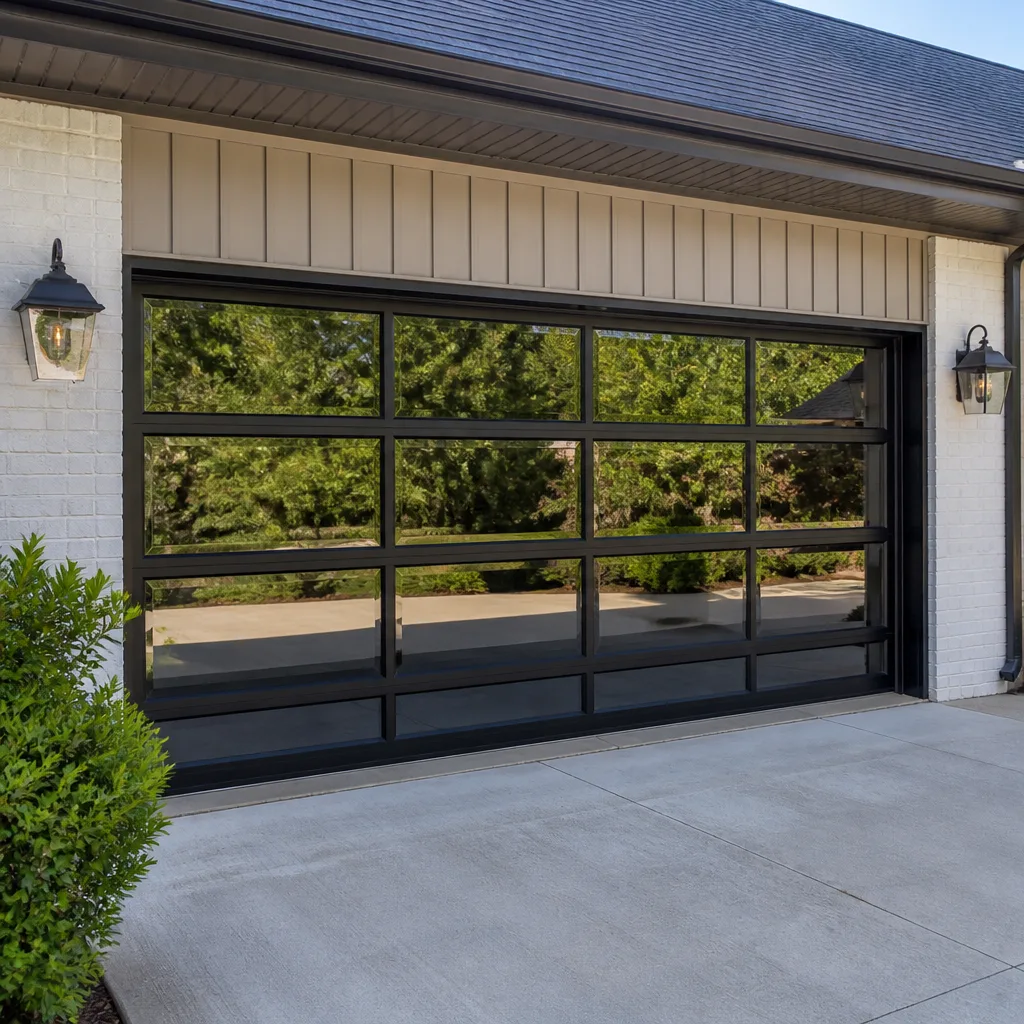 Full-view glass
 LiftMaster openers
 Chamberlain openers
Full 25-point door and opener safety check with every visit - springs, cables, rollers, tracks, and your LiftMaster or Chamberlain opener included
You get a price before we start. It does not change when the pro arrives.
Get your free estimateHow to Hire a Garage Door Contractor in Maplewood: A Step-by-Step Guide
A garage door spring installed at the wrong cycle rating will fail in about 18 months instead of the seven years you paid for, and no amount of review stars tells you whether a contractor gets that calculation right. Most homeowners hire a garage door contractor by comparing three quotes and picking the middle one. That works fine for a driveway seal. It doesn’t work for a torsion system under hundreds of pounds of load, an opener matched to a specific door weight, or a warranty tied to a company that may not answer the phone next year. This guide gives you a technical vetting framework for hiring in Maplewood: the questions to ask, how to read an estimate line by line, what Minnesota licensing and bonding actually cover, and which red flags matter in this market. You’ll finish knowing how to tell a specialist from a generalist before you sign anything.
Quick Answer
To hire a garage door contractor in Maplewood, ask three things before any quote: what spring cycle rating and wire gauge they’ll use, whether the opener’s lift rating matches your door’s actual weight, and whether they’ll put the equipment specs in writing on the estimate. A confident contractor answers specifically and names parts. A vague one says “standard parts” or “whatever’s on the truck.” Compare written estimates, confirm a local call-back number, and make sure the price is quoted and agreed before any work starts.
Styles & brands we work with
- Raised-panel steel
- Carriage house
- Modern flush
- Full-view glass
- LiftMaster openers
- Chamberlain openers
Table of Contents
- The Three Technical Questions to Ask Before Any Quote
- How to Read a Garage Door Estimate Line by Line
- Red Flags Specific to the Maplewood Market
- What Licensing and Bonding Cover in Minnesota (and What They Don’t)
- Multi-Brand Specialists vs. Single-Brand Dealers
- Why Spring Work Deserves Its Own Vetting
- A Numbered Hiring Process You Can Follow
- Warranty and Call-Back: The Questions Most Homeowners Skip
The Three Technical Questions to Ask Before Any Quote
Before you talk price, ask these three questions. The answers tell you more about a garage door contractor than a truck wrap ever will.
1. “What spring cycle rating and wire gauge will you install?”
A garage door torsion spring is rated by how many open-and-close cycles it’s built to survive. Standard springs sit on the low end; high-cycle springs are wound from thicker wire and last substantially longer. A confident contractor answers with a specific cycle rating and wire size, explains the trade-off between cost and lifespan, and asks how often you use the door. A vague answer like “the good ones” or “whatever fits” means you’re being quoted a commodity part, not a calculated one. Since a Maplewood home with an attached garage often runs the door several times a day, cycle rating is not a technicality. It’s the whole number.
2. “How did you weigh the door, and what opener lift rating does that require?”
Openers are rated for door weight and size. A unit sized for a light door will strain, overheat, and eventually fail on a heavier insulated door. A contractor who knows what they’re doing measures or references the door’s weight and matches the opener’s rating to it. If they can’t tell you how they arrived at the opener recommendation, they didn’t arrive at it. They guessed.
3. “Will the equipment specs appear on the written estimate?”
Every part that matters should be named on paper: spring cycle rating and wire gauge, opener model and horsepower, roller type, hinge and bracket grade. If the estimate says only “spring replacement” with a price, you have no way to compare it against another bid or hold anyone to what was promised.
We work on your brand, so when we quote a job we already know what a LiftMaster or Wayne Dalton system needs in terms of matching parts. A technician who arrives unfamiliar with your equipment spends your appointment guessing.
How to Read a Garage Door Estimate Line by Line
An itemized estimate should read like a parts and scope list, not a single lump sum. Here’s what each line should contain when it’s done right.
- Labor: should specify what’s included – removing the old component, installing the new one, balancing the door, testing the safety reverse. “Labor” as a single unexplained line is a red flag.
- Parts: spring cycle rating and wire gauge, opener make and model, drum and cable spec, roller and hinge grade. Parts named specifically can be compared; parts described generically cannot.
- Hardware count: “two springs” or “spring pair” tells you whether you’re getting one spring or a matched pair replaced together. Those are different jobs at roughly double the cost.
- Disposal: high-tension springs and old openers are hazardous and bulky. A serious estimate states whether removal and haul-away are included.
- Permit line: most cities require a permit for structural changes or a new-door installation, so ask your city’s building department whether your job needs one. An estimate that quietly omits permit responsibility should prompt the question.
- Warranty terms: what’s covered, for how long, on parts versus labor, and who honors it.
The final price should be quoted and agreed before any work starts. When you see the full itemization, ask the contractor to walk you through anything you don’t recognize. A good one will.
The same logic applies to any repair, not just springs. If you’re comparing bids for a snapped cable or a dented panel, the garage door repair page reflects the same itemized approach we take on every job.
Red Flags Specific to the Maplewood Market
Local market conditions create local hiring hazards. Watch for these when vetting a contractor anywhere in Maplewood.
- No springs rated for the Minnesota climate. Temperature swings in this region stress torsion springs differently than a mild climate does. A contractor who doesn’t stock or specify springs rated for cold-climate cycling is quoting you a part that may not hold up through a Minnesota winter. Ask specifically whether the springs are rated for the local climate; a confident answer will name the rating.
- No local call-back number. A fly-by-night operation routes calls through a national call center. Ask for the number you can reach in an emergency. If a door fails at night and you have no one to call, the savings on the original quote evaporate.
- A price that’s dramatically lower than every other bid. It almost always means thinner springs, a lower-cycle rating, or parts sourced to meet a price rather than a spec. Garage doors are mechanical systems; the parts cost what they cost.
- No written estimate before work begins. Verbal quotes leave you with no protection when the invoice arrives bigger than the number you were told.
- Contractor won’t answer questions about their equipment. If they can’t name the spring rating or opener model, they don’t know, and that’s a problem on a high-tension system.
In our experience, the contractors worth hiring are the ones who slow down and answer the technical questions. The ones who rush to close do it because there’s nothing behind the pitch.
What Licensing and Bonding Cover in Minnesota (and What They Don’t)
Minnesota requires residential contractors to be licensed, and the license is a baseline, not a guarantee. Here’s what each protection actually covers and where it stops.
- State licensing: confirms the contractor has met the state’s requirements to legally perform residential work. It does not confirm they’re skilled at spring calculations or opener sizing. Those are separate competencies.
- Bonding: protects you if the contractor fails to fulfill a contract or causes certain types of loss. It is not a general guarantee against poor workmanship.
- General liability insurance: covers property damage during the job. Ask for the certificate and confirm it’s current. A certificate that expired last year is not protection.
- Workers’ compensation: covers injuries to workers on your property. Without it, an on-site injury could become your problem.
Here’s the part most homeowners miss: insurance certificates need the correct endorsement, and that endorsement is what makes the coverage apply to garage door work. Ask for the certificate of insurance and check that it names garage door installation and repair explicitly. A general contractor’s policy often excludes high-tension spring work. When you hire, confirm the local pro is licensed and insured as their state requires, and don’t be shy about asking for the paperwork in writing.
Multi-Brand Specialists vs. Single-Brand Dealers
If your door is a common make – LiftMaster, Chamberlain, Genie, Clopay, Amarr, Wayne Dalton, Craftsman, or Raynor – you have two paths: a single-brand dealer or a multi-brand specialist. Each has a place, and the right choice depends on your equipment.
When a single-brand dealer makes sense
If you have a newer door still under the manufacturer’s warranty and the dealer is an authorized service provider, using them protects the warranty. That’s their strength: they know the product line inside out and can honor manufacturer coverage directly.
When a multi-brand specialist wins
If your door or opener is out of warranty, is a less common make, or you need emergency work on short notice, a multi-brand specialist is usually the better fit. They stock or can source parts across eight major brands, so they aren’t limited to one product line. Their technicians work on a LiftMaster opener one morning and a Raynor door the next, which means they arrive already familiar with your exact system – and they don’t have to send you somewhere else if the brand on your door isn’t the one they sell. One call, full solution.
For homeowners who rely on the garage as the primary entry point, that saved time matters. Our technicians have up to 9 years of experience working across these brands, so the familiarity is practice, not theory.
Why Spring Work Deserves Its Own Vetting
Spring repair is the highest-risk, most commonly mishandled job in this trade. It’s also the one many general handymen decline outright, for good reason.
A garage door torsion spring is wound under high tension to counterbalance the door’s weight. When it’s handled without the right tools and knowledge, it can release suddenly and cause serious injury. This is a genuine safety line, so hear it clearly: we don’t recommend attempting spring work yourself. A trained professional has the winding bars, the training, and the safety habits to do it without putting anyone in danger. What you should know as a homeowner is how it works and what to ask about, not how to do it.
- Cycle rating: the number of open-and-close cycles a spring is built for. Longer-lifespan springs cost more but last years longer.
- Wire gauge: thicker wire, wound to spec, is what delivers the higher cycle rating.
- Matched pair: springs are usually replaced together. A “one spring” quote and a “two spring” quote are different prices; confirm which you’re getting.
- Cables and drums: spring work often reveals worn cables and drums that should be inspected at the same time.
Spring repair done right starts with a contractor who names the rating and the gauge on the estimate. If that’s what you’re looking for, our garage door repair specialists handle spring work as a dedicated service.
A Numbered Hiring Process You Can Follow
Here’s the sequence we’d suggest, in order, when hiring a garage door contractor in Maplewood.
- Define the job. Is it a repair, a replacement, an opener issue, or a new installation? Each has a different vetting path and a different urgency level. A new installation is measured, ordered, and scheduled; a repair is usually same-day.
- Gather two or three local names. Ask neighbors, search with your specific brand in mind, and confirm each candidate has a local number you can reach.
- Ask the three technical questions. Spring cycle rating and gauge, door weight and opener lift rating, and whether specs appear on the written estimate. Note who answers specifically and who dodges.
- Request written, itemized estimates. Each should break down labor, parts by spec, hardware, disposal, and warranty.
- Verify licensing and insurance. Ask for the state license and a current certificate of insurance with the right endorsement for garage door work.
- Compare, don’t just pick the cheapest. Compare specs against specs. A bid that’s $200 lower on lower-cycle springs isn’t cheaper in two years.
- Get it in writing before work starts. The price is quoted and agreed first. If anything changes on-site, it gets discussed and approved before they proceed.
Warranty and Call-Back: The Questions Most Homeowners Skip
A warranty is only as good as the company standing behind it. Before you sign, ask who honors the warranty, for how long, and whether it covers parts, labor, or both.
A few lines to clarify:
- Parts warranty versus labor warranty. Manufacturer parts warranties don’t cover the labor to reinstall them. Ask specifically whether labor is covered.
- Who to call and what number. If the number is a call center in another state, the warranty is paperwork. If there’s a local call-back number, you can actually use it.
- How a callback request is handled. If an opener you installed stops reversing the next month, who comes out and at what cost?
- Transferability. If you sell the home, does the warranty carry to the next owner?
When a door fails to close at night, or traps a car in the morning, the contractor’s accessibility gets tested fast. That’s why we treat garage door opener repair as a core service with a clear callback path, not a footnote.
Common Mistakes to Avoid
- Picking the middle quote because it’s the middle. The middle bid is only a good choice if the middle specs are right. Compare the spring rating and opener model, not just the total.
- Not asking whether it’s one spring or a matched pair. A quote that says “spring replacement” without saying how many leaves you exposed. Confirm in writing before work starts.
- Ignoring the local call-back test. In Maplewood’s winter, a door that sticks shut is a real problem. A contractor who only has a national number is a contractor you can’t reach when it matters.
- Skipping the certificate of insurance. Ask for it and check the endorsement. General liability policies often exclude high-tension spring work.
- Assuming a new opener fixes a door problem. If the door’s balance or spring tension is wrong, a new opener works harder and fails sooner. Diagnose first.
- Not asking about disposal. Old springs and openers are heavy and hazardous. If haul-away isn’t on the estimate, ask whether it’s included.
- Choosing a single-brand dealer for a less common make. If your door is a Wayne Dalton or Raynor and the dealer only sells another line, you’ll get a referral or a guess. A multi-brand specialist can work on the door you actually have.
See the difference
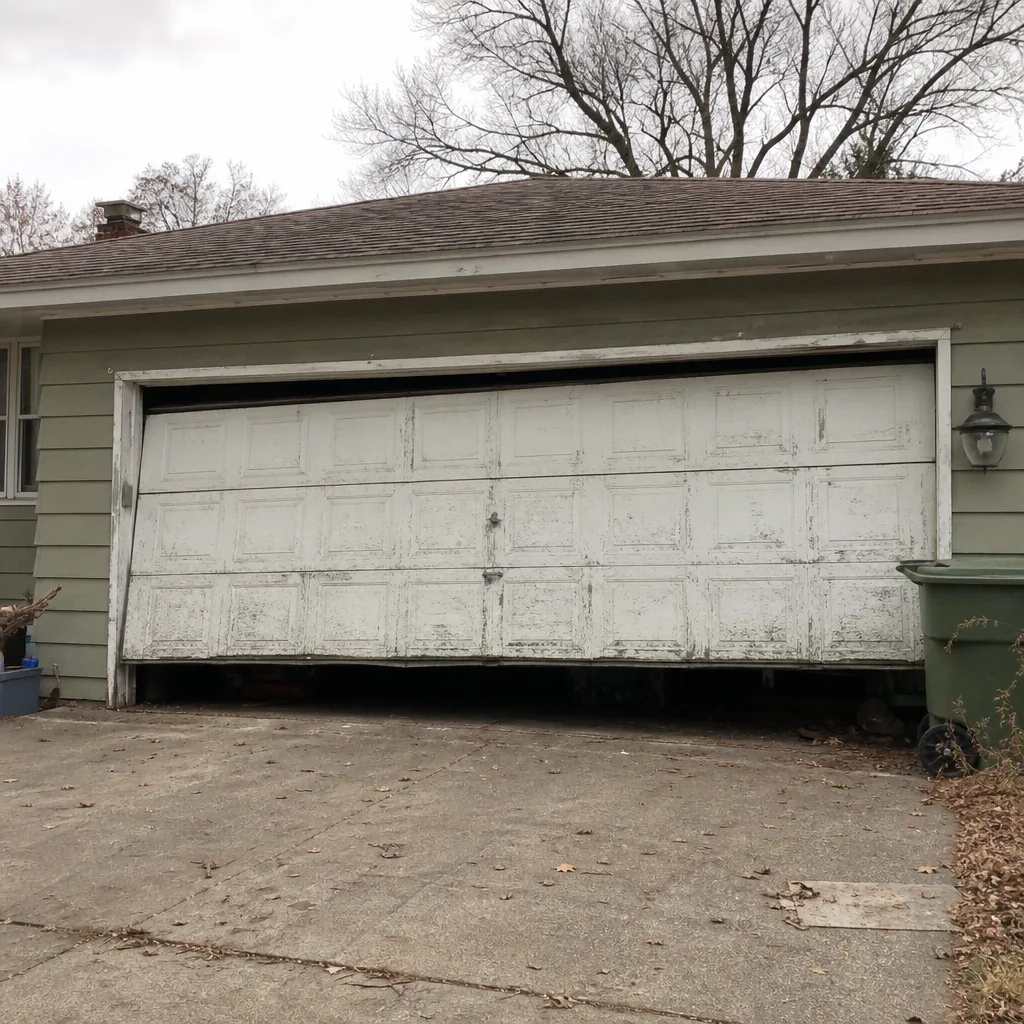 Before
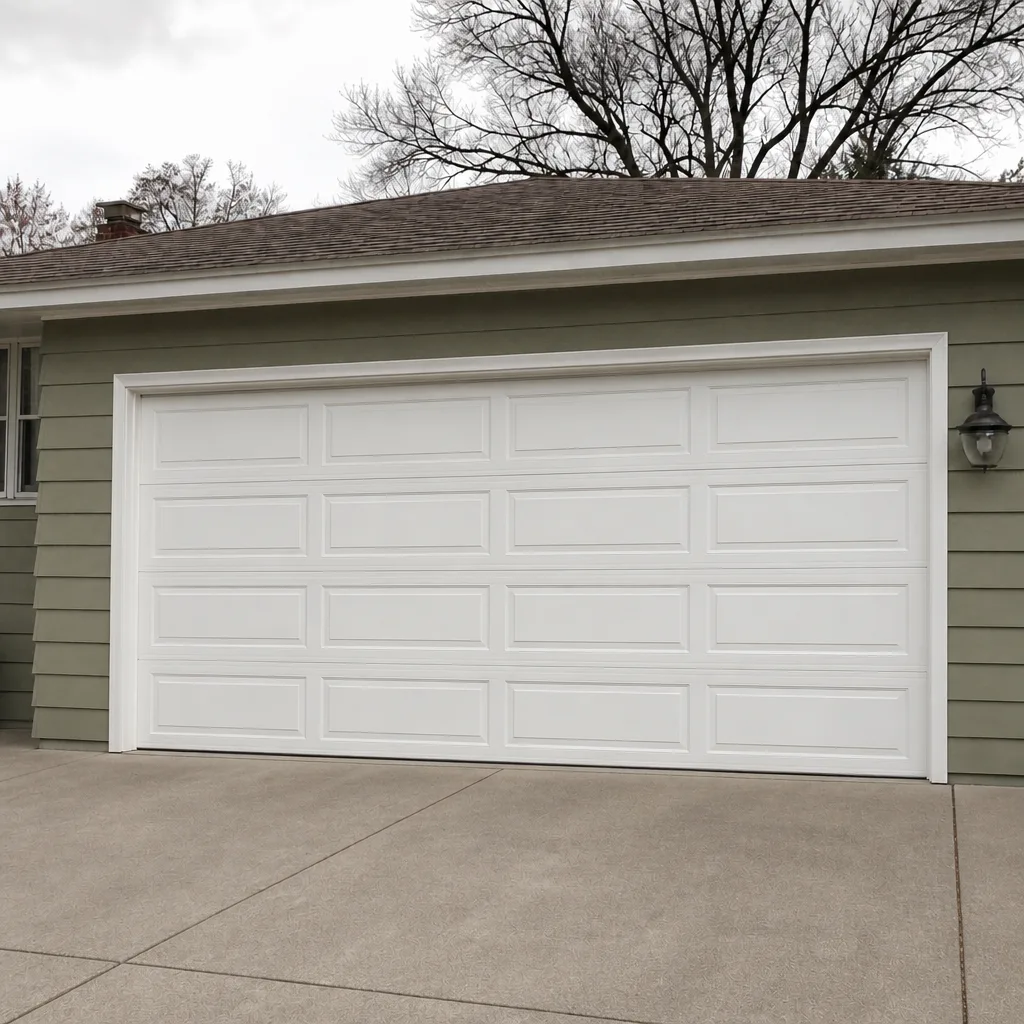 After
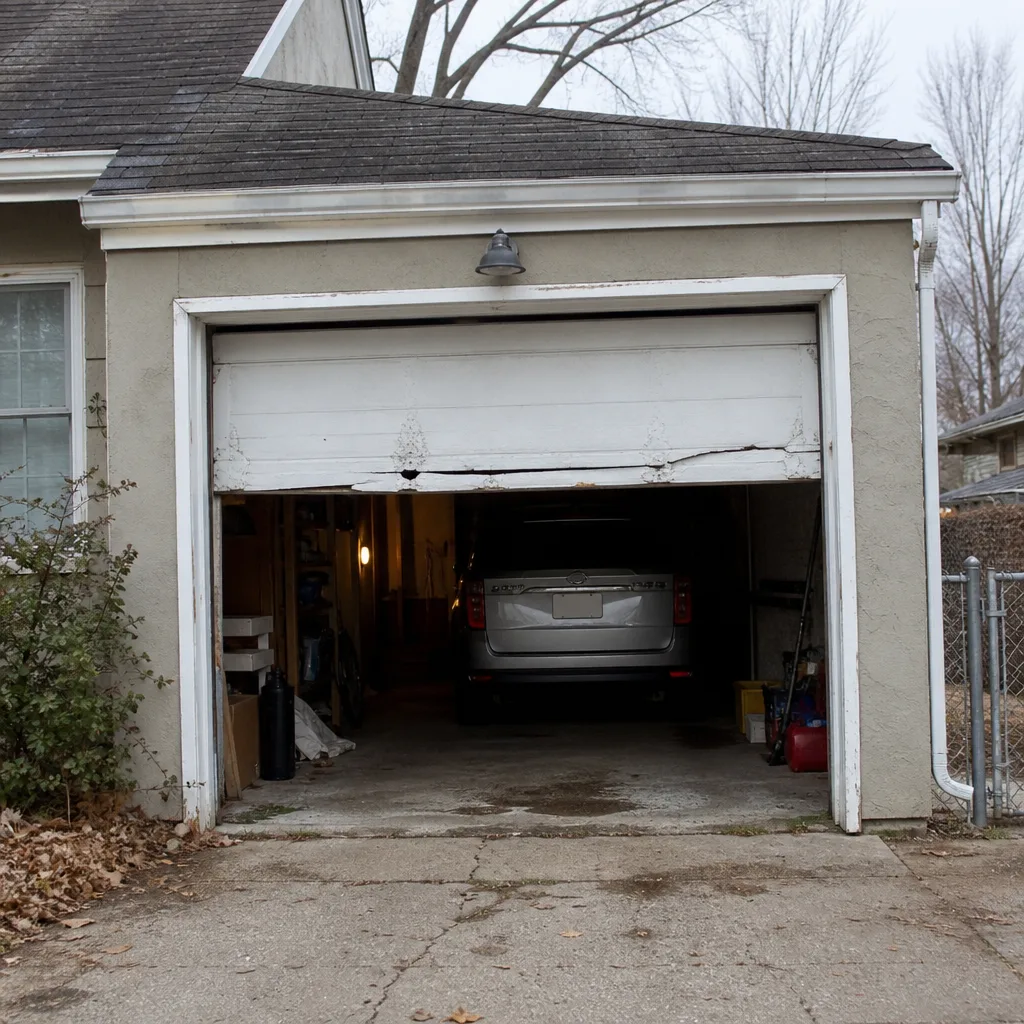 Before
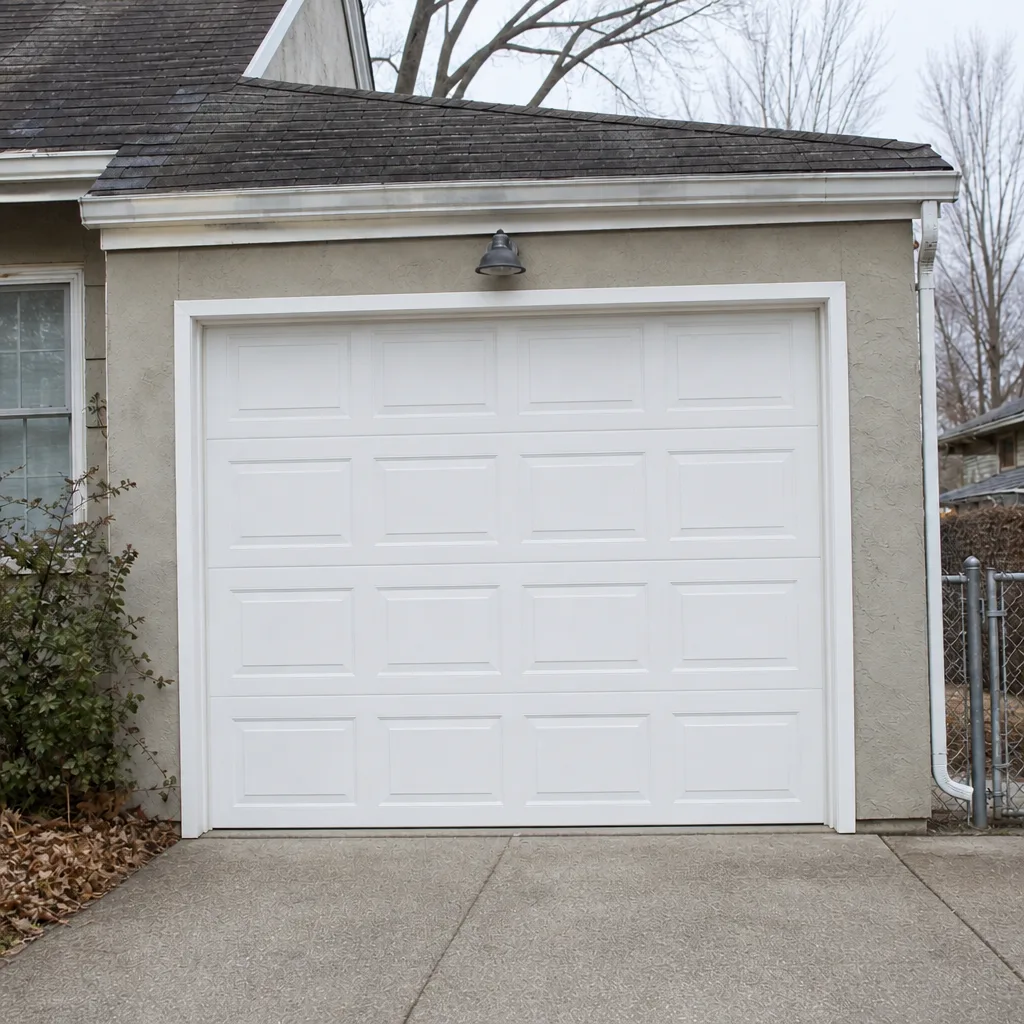 After
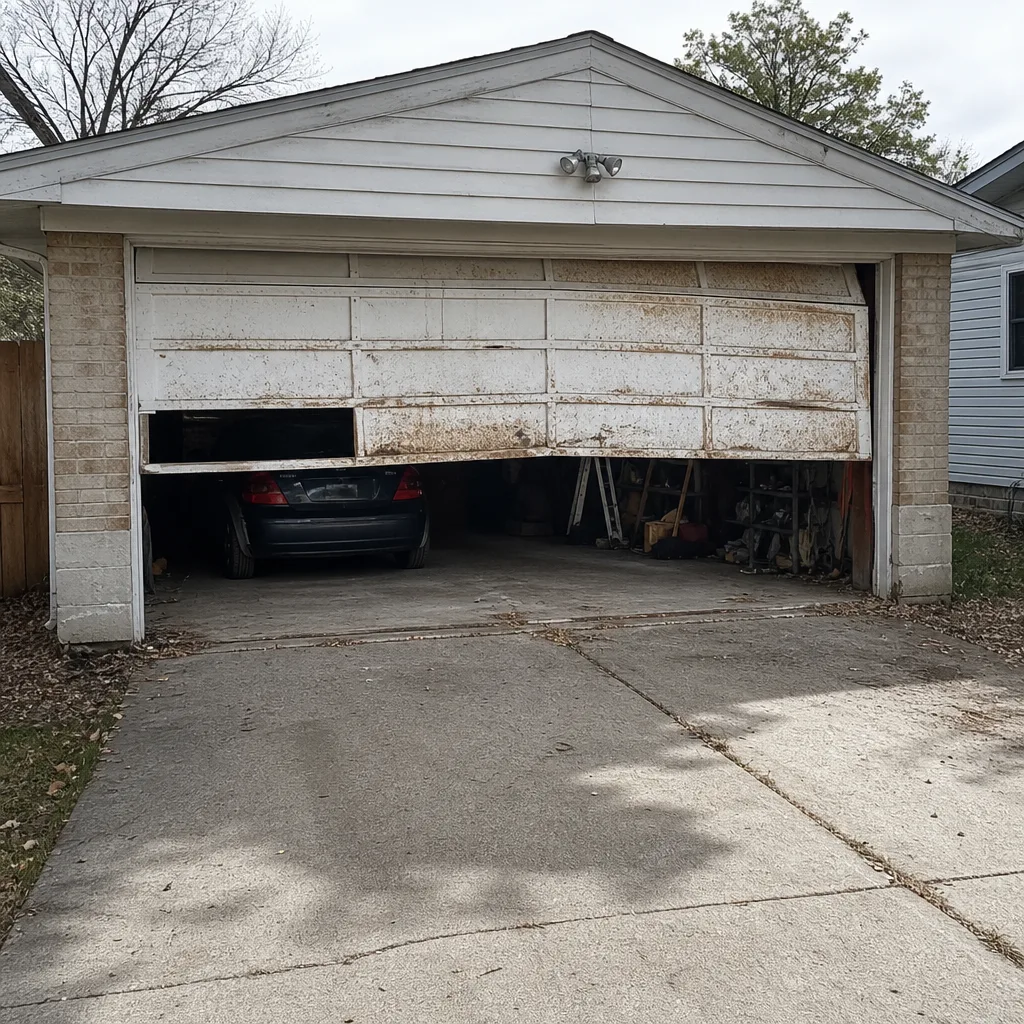 Before
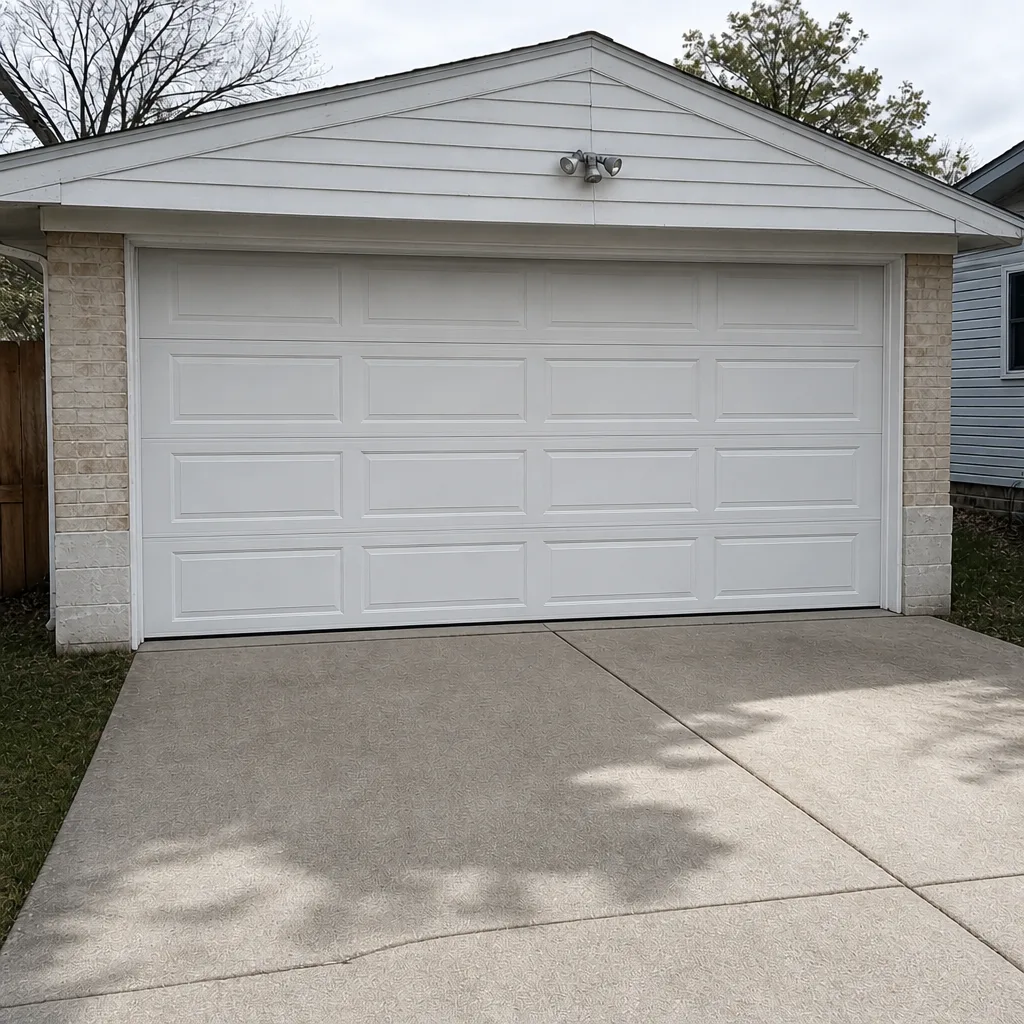 After
When to Call a Professional
Some garage door problems are cosmetic. Others shouldn’t wait. Call a professional when a spring snaps and the door won’t lift, when the door won’t close at night, when the opener runs but the door doesn’t move, or when a cable is visibly frayed. Do not attempt spring or cable work yourself; the tension in those components can cause serious injury. For a door that’s off its track or visibly damaged, keep people and vehicles clear and call for service. For a new-door installation or a full replacement, expect a measured, scheduled job rather than a same-day repair. Maplewood Garage Door Repair Pros offers free estimates in Maplewood – call (855) 550-7783, and our technicians are ready when your door fails or needs an upgrade.
Frequently Asked Questions
Most garage door repairs in Maplewood fall in a typical range depending on the part – a spring repair is a different job than an opener repair or a panel replacement. Call (855) 550-7783 for an exact quote; estimates are free, and the price is quoted and agreed before any work starts.
Ask the three technical questions and see how specific the answers are. A qualified contractor names the spring cycle rating and gauge, explains the opener sizing, and puts the specs on the estimate. Vague answers are the tell.
Choose a multi-brand specialist if your door is out of warranty, is a less common make, or you need emergency work. Choose a single-brand dealer if your door is newer and still under manufacturer warranty with an authorized provider. Both can be right; the match depends on your equipment.
Most cities require a permit for a new-door installation or significant structural work, so ask your city’s building department whether your job needs one. A contractor who’s done local work should be able to tell you before you sign.
It shouldn’t. The price is quoted and agreed before any work starts, and any change is discussed with you first. Confirm in writing that the written estimate is the price you’ll pay.
The local pro is licensed and insured as their state requires, and you can ask to see the certificate of insurance and confirm the endorsement covers garage door work. Don’t sign without it.
The Bottom Line
Hiring a garage door contractor in Maplewood isn’t a price contest. It’s a spec check. A cheaper quote on the wrong spring is a more expensive bill in two years. Ask the three technical questions, get the estimated pricing itemized on paper, and confirm the local pro is licensed and insured. Check whether your brand – LiftMaster, Wayne Dalton, Raynor, or another – is one the contractor already knows, because a specialist who arrives fluent in your equipment doesn’t waste your time guessing. The written estimate should set the price before any work starts, and a local call-back number is your warranty in practice. When you’re ready to get an estimate, call (855) 550-7783.
Written by the team at Maplewood Garage Door Repair Pros.