Last updated November 23, 2026
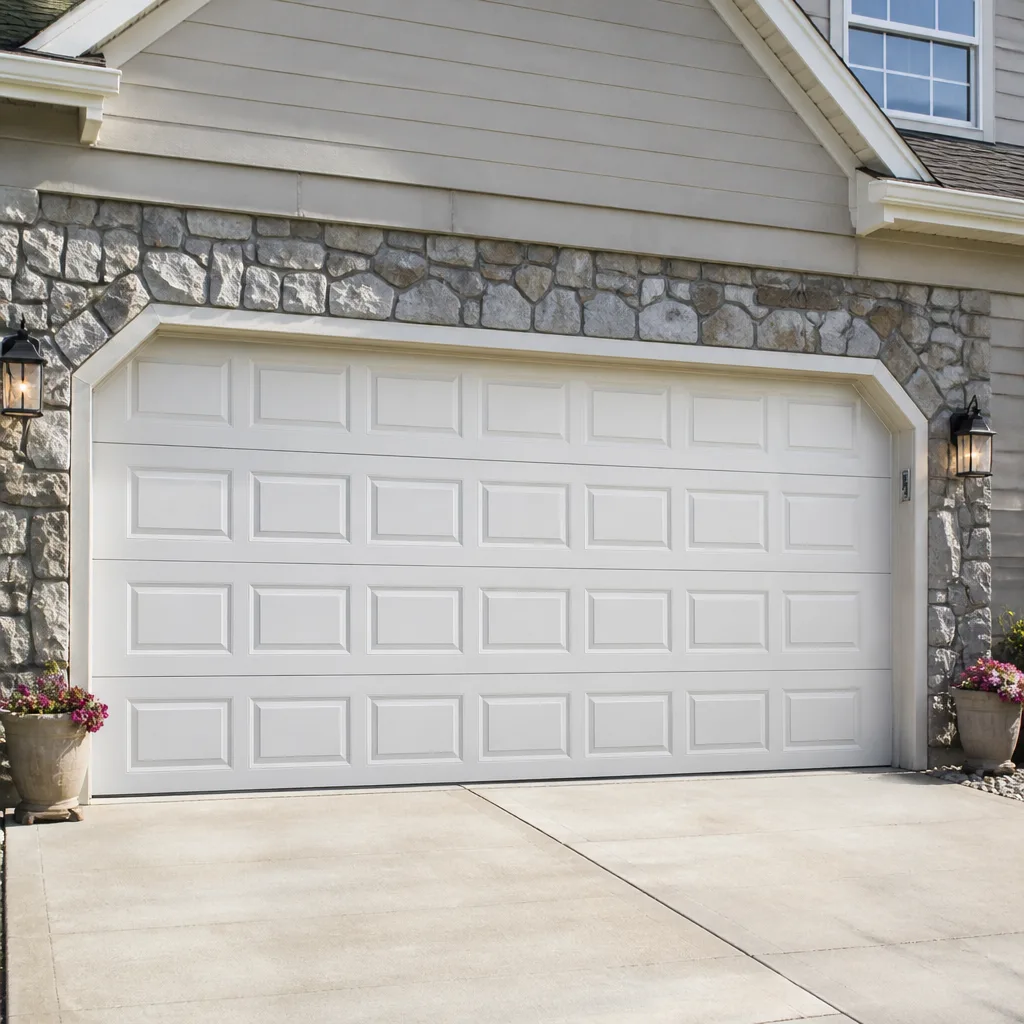 Raised-panel steel
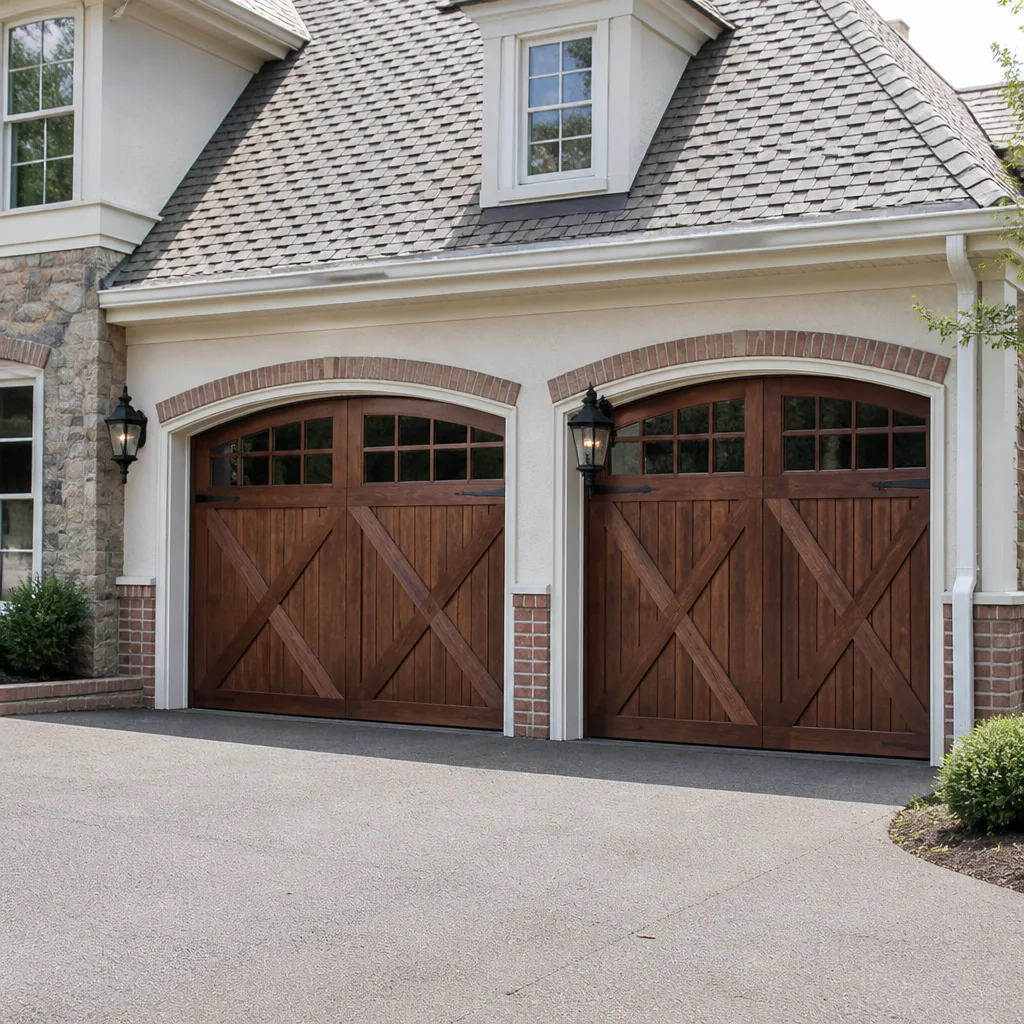 Carriage house
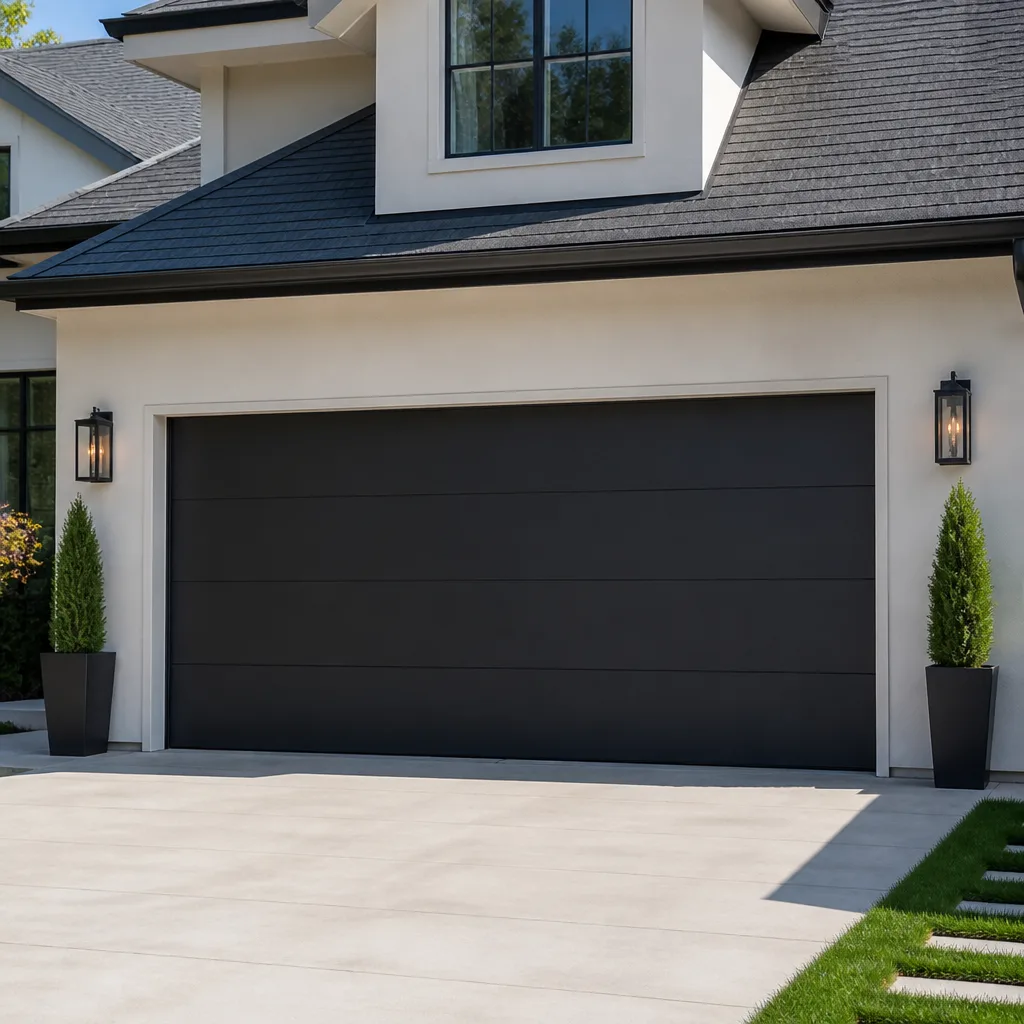 Modern flush
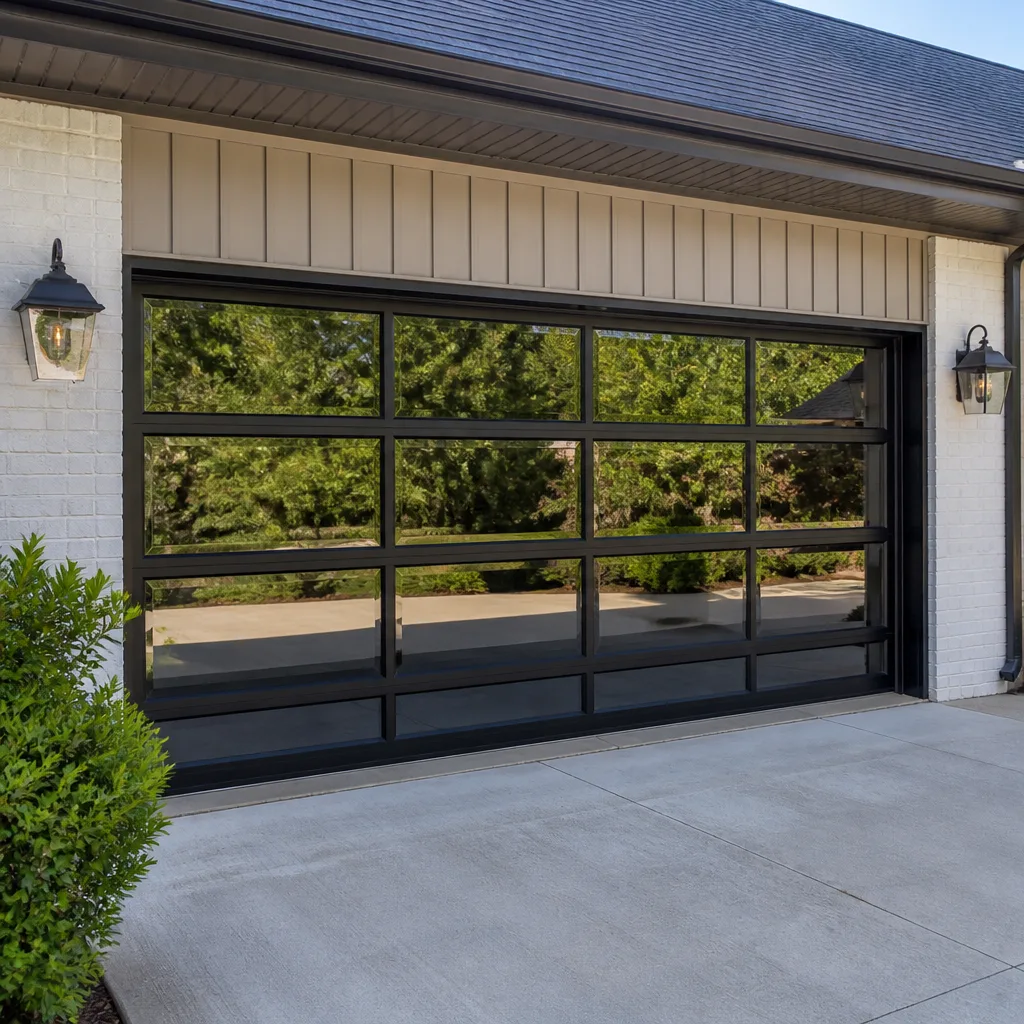 Full-view glass
 LiftMaster openers
 Chamberlain openers
Full 25-point door and opener safety check with every visit - springs, cables, rollers, tracks, and your LiftMaster or Chamberlain opener included
You get a price before we start. It does not change when the pro arrives.
Get your free estimateGarage Door Permits, Codes & Inspections in Maplewood, MN: What You Need to Know
Most homeowners assume every spring, panel and opener swap is permit-free, and usually they’re right. The surprise comes later, during a home sale, when the title company asks for the paper trail on a garage door that was replaced rather than repaired. A new door installed without the required permit in Ramsey County can surface during the title insurance and disclosure phase and complicate the closing. The line between a no-permit repair and a permit-required modification sits exactly where a lot of Maplewood renovation projects land: full replacements and opener upgrades wired into new electrical work. This guide draws that line clearly, walks through the Minnesota code that governs attached garages, explains what a Maplewood inspector actually looks at, and covers the HOA overlay that many planned developments add on top of city rules. You’ll also find the practical steps for pulling a permit and what UL 325 has to do with any of it.
Quick Answer
In Maplewood, a like-for-like garage door repair (a spring, a roller, a panel, a section swap) generally does not require a building permit. A full door replacement, a structural modification to the opening, or work tied to new electrical for an opener typically does. When in doubt, call the City of Maplewood’s building department before you order the door. Inspectors check the door’s fire rating on attached garages, its attachment and hardware, and opener safety features required by UL 325.
Styles & brands we work with
- Raised-panel steel
- Carriage house
- Modern flush
- Full-view glass
- LiftMaster openers
- Chamberlain openers
Table of Contents
- Where the Permit Line Actually Falls in Maplewood
- What the Minnesota State Building Code Requires for Attached Garages
- How UL 325 Opener Standards Meet a Maplewood Inspection
- The Permit Process in Maplewood, Step by Step
- HOA Overlay: Where Deed Restrictions Go Further Than City Code
- Why Maplewood’s Climate Shortens the Life of Doors and Springs
- What Unpermitted Work Means at Resale and for Insurance
Where the Permit Line Actually Falls in Maplewood
The dividing line is repair versus replacement, and it’s cleaner than most people expect. If you’re keeping the same door and the same opening, and a technician is swapping out worn parts, you’re in repair territory and no permit is involved. The moment the door itself goes away and a new one goes in, or the opening changes, you’ve crossed into work that Maplewood’s building department typically wants to see.
Here’s how it usually breaks down:
- No permit typically required: spring replacement, cable replacement, roller replacement, hinge or bracket repair, panel or section replacement on a like-for-like basis, opener motor swap on existing wiring, and routine adjustment of tracks and travel limits.
- Permit typically required: full garage door replacement, changing the door type (a sectional for a tilt-up, say, or a change in door material that alters weight and loading), widening or heightening the opening, replacing the header, and running new electrical or adding a dedicated circuit for an opener.
- Ask first: converting a manual door to an opener-driven door, adding a second opener to an existing door, or replacing a door on an attached garage where the fire separation rating matters.
In our experience, the confusion comes from opener upgrades. A homeowner replaces a tired Chamberlain opener on the same circuit, same location, and no permit is needed. Then the panel gets upgraded for a higher-draw unit and a new run of wire goes in, and now the electrical portion is the part the city wants to review. Keep those two pieces separate in your head: the door is one question, the electrical is another. If you’re doing a full swap, our garage door installation page covers what’s involved on the build side.
What the Minnesota State Building Code Requires for Attached Garages
The Minnesota State Building Code governs attached garages primarily through fire separation and structural attachment. An attached garage shares a wall or ceiling plane with the house, and the code requires that separation to resist fire long enough for occupants to get out and for the fire department to respond. The relevant requirement is a fire-rated separation between the garage and the living space, and the garage door itself is part of what that rating addresses on the opening side. Detached garages are typically exempt from the dwelling separation requirement, which is one reason a detached-garage door replacement is often a simpler review.
What the code cares about, in practical terms:
- The door’s fire rating when it’s part of a required separation. An inspector will look for the label or documentation showing the door meets the rating called for in your permit scope.
- The attachment of the door and its hardware to the framing. Spring anchors, brackets and track fasteners get pulled hard every cycle, and inspectors know a marginal anchor can fail.
- The condition of the framing itself. If the header is soft or the jambs are out of plumb, the door will not sit right and the inspection reflects that.
- Clearance for the door travel and the safety devices at the floor.
We work on Craftsman, Raynor and LiftMaster systems across Maplewood, and the code layer is the same regardless of brand. What changes is the documentation the manufacturer can supply for a given model’s fire rating. Some doors carry a rating as a matter of catalog spec; others don’t, which is why door selection during a replacement should account for the code path before you order, not after.
The door brand on your existing equipment matters here too. garage door repair work on an older door sometimes turns up a model whose rating documentation is long gone, and that’s worth knowing before you decide to repair rather than replace.
How UL 325 Opener Standards Meet a Maplewood Inspection
UL 325 is the safety standard for garage door operators. It’s the reason your opener reverses when it meets an obstruction and the reason the photo-eye pair sits a few inches off the floor at each side of the door. The important thing for a Maplewood homeowner is that inspectors and technicians both use UL 325 as the benchmark for opener safety, so it comes up in nearly any walkthrough involving the opener.
When an inspector looks at the opener, they’re checking:
- That the photo-eye pair is present, aligned, and mounted low enough to detect a small obstruction.
- That the opener reverses on contact, verified with a test object in the path.
- That the wall-mounted control is at a reachable height and that any external keypad or wireless control is compatible.
- That the manual release works and is accessible, because a person needs to be able to disengage the door by hand.
- That the door balances. An unbalanced door can defeat the opener’s force settings, and that’s a mechanical problem no safety setting will fix.
We see a lot of older openers in Maplewood where the photo-eyes were removed or bypassed during a previous repair. That’s a UL 325 failure and a safety issue regardless of whether an inspection is involved. A garage door opener repair visit includes restoring those safety features, not just getting the door moving again.
Chamberlain and LiftMaster units are the most common we encounter locally, and both ship with the safety reversing features required under UL 325. If your opener predates those features or someone disconnected them, that’s the first thing to address.
The Permit Process in Maplewood, Step by Step
The permit for a garage door replacement or an opener electrical upgrade is typically pulled by the contractor performing the work, though a homeowner can pull one for their own work in some cases. The City of Maplewood’s building department is the authority to call for the exact requirements on your project, and that call costs nothing. Turnaround on a residential permit of this scope is usually measured in days to a couple of weeks, depending on the city’s workload at the time.
Here’s the process as it usually plays out:
- Confirm the scope with the city. Call the building department, describe exactly what’s being replaced or modified, and ask whether a permit is required. Get the answer from the city, not from a contractor’s assumption.
- Pull the permit. The contractor typically files it with the project scope, door specs, and any rating documentation for the door being installed.
- Have the door measured and ordered. This is why a replacement is scheduled rather than same-day work. The door is built to the opening, and the rating documentation comes with the order.
- Install. The door goes in, the hardware gets set, the opener gets installed or connected, and the safety devices get tested.
- Inspection. The inspector verifies the door rating, the attachment and hardware, the opener safety features under UL 325, and the electrical if that was part of the scope.
- Sign-off. The permit closes and you keep the paperwork. That paperwork is what answers the title company’s question at resale.
Note that the schedule is driven by the order, not by a rush. You can get a free measure and a written price quickly; the door itself takes time to arrive. If you’re comparing options, our Maplewood Garage Door Repair Pros page lays out the services we cover.
HOA Overlay: Where Deed Restrictions Go Further Than City Code
Maplewood has planned developments where the homeowners association’s deed restrictions add design rules the city code doesn’t touch. The city cares about structure, fire separation and safety. The HOA cares about how the door looks from the street. Those are different questions, and a door that passes inspection can still be rejected by an architectural review committee.
Common HOA restrictions on garage doors:
- Color palettes. Many associations limit the door to a specific set of approved colors that match the home’s trim or the street’s existing look.
- Window treatment. Whether a door can have windows, how many, and what style.
- Material. Some associations limit doors to a specific material for consistency across the development.
- Visible hardware. Panel style, hinges and struts that show from the street may be restricted.
- Opener noise limits on shared walls, which comes up in townhome and attached-home sections of a development.
Before you order a replacement door in Maplewood, get the HOA approval in hand. It’s a separate step from the city permit and it’s easy to skip. If your association’s rules require any variance, that can extend the timeline, so it belongs at the front of the project, not the end. We’ve seen door orders go in on a color the HOA later objected to because no one checked the deed restrictions first. Getting that approval in writing is cheap; replacing a door that doesn’t comply is not.
Why Maplewood’s Climate Shortens the Life of Doors and Springs
Maplewood’s climate does a number on garage doors. The freeze-thaw cycle that runs through the cooler months works on the door’s seals, the concrete at the floor, and the spring tension, all at once. A spring that’s fine in July can be tired by February because cold stiffens the metal and shrinks the operating tolerances. That’s why spring failures cluster in the coldest weeks, and why the number of emergency calls we get spikes when the temperature drops.
What this means for codes and inspections is concrete:
- Doors and hardware that have survived several winters often carry rust and fatigue that fail a walkthrough. A door that looks acceptable on the outside can have anchors and brackets that no longer hold torque.
- Snow and ice at the floor line can damage the bottom seal and cause the safety reverse to trip. That’s an inspection item and a common false-trip complaint.
- Expansion and contraction at the opening can throw tracks out of alignment, which an inspector reads as a mechanical defect.
- Older single-pane window panels on garage doors crack in extreme cold, and replacing a pane is a repair, not a replacement.
Our spring repair work is the safety-critical end of this. Springs are under high tension, and a tired or failing spring is dangerous to handle without the right tools and training. We treat that as a specialty and recommend against attempting it yourself regardless of how simple the instructional videos make it look.
What Unpermitted Work Means at Resale and for Insurance
Unpermitted garage door work is not usually a problem until you sell. That’s when the title company asks for documentation on anything the disclosure form flags as recent work. If the door was replaced without a permit, and the buyer’s lender asks for confirmation of compliance, you can be facing an after-the-fact permit, an inspection, or a concession at closing. None of these are fatal, but they cost time and money, and they create friction exactly when you don’t want it.
Insurance is the other side. Homeowner policies generally expect permitted work to be documented, and a claim tied to a door that was never inspected can complicate the adjuster’s review. The conversations we have with homeowners in Maplewood about this usually start with a question about a door they’re about to replace. The right answer depends on the scope: a spring or panel swap is repair and typically documentation-free; a full replacement needs the permit and the inspection. Getting that distinction right at the front of the project is the cheapest insurance there is.
For a full-replacement project, the written estimate should itemize the door, the hardware, the permit, and the inspection. That way there’s no surprise when the city’s fee appears. Call (855) 550-7783 for a free measure and a written price on a replacement.
Common Mistakes to Avoid
- Assuming every door project needs a permit. A spring swap or a panel replacement on the same opening is typically permit-free. Over-permitting costs you time and money; under-permitting costs you at closing.
- Assuming no door project needs a permit. A full replacement is the common case where a permit is required, and it’s the one homeowners most often skip.
- Ordering a door before checking the HOA rules. Deed restrictions on color and style can be stricter than city code, and they’re the reason a door gets rejected after installation.
- Treating the opener as a separate, permit-free project. If new electrical runs are part of the upgrade, that electrical work triggers the permit even when the door itself is unchanged.
- Letting a previous owner’s work go undocumented. At resale, an unpermitted door installed years earlier still counts. Ask for the paperwork when you buy, and get the permit pulled correctly when it’s your turn.
- Letting photo-eyes get bypassed. A UL 325 safety feature removed during a repair is a safety problem and an inspection failure. Restore it before anything else.
- Waiting until after installation to call the building department. A quick call to Maplewood’s building department at the start of the project tells you exactly what’s required, and the answer is free.
See the difference
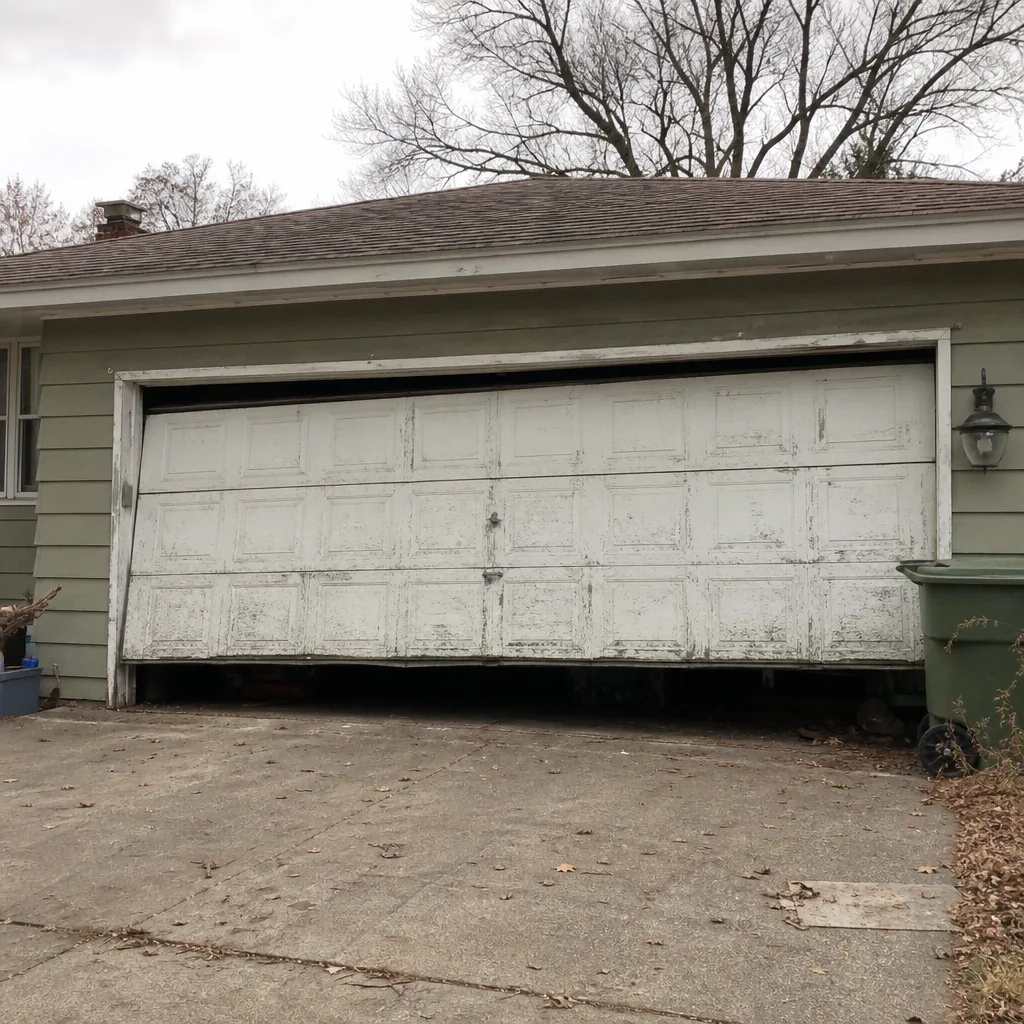 Before
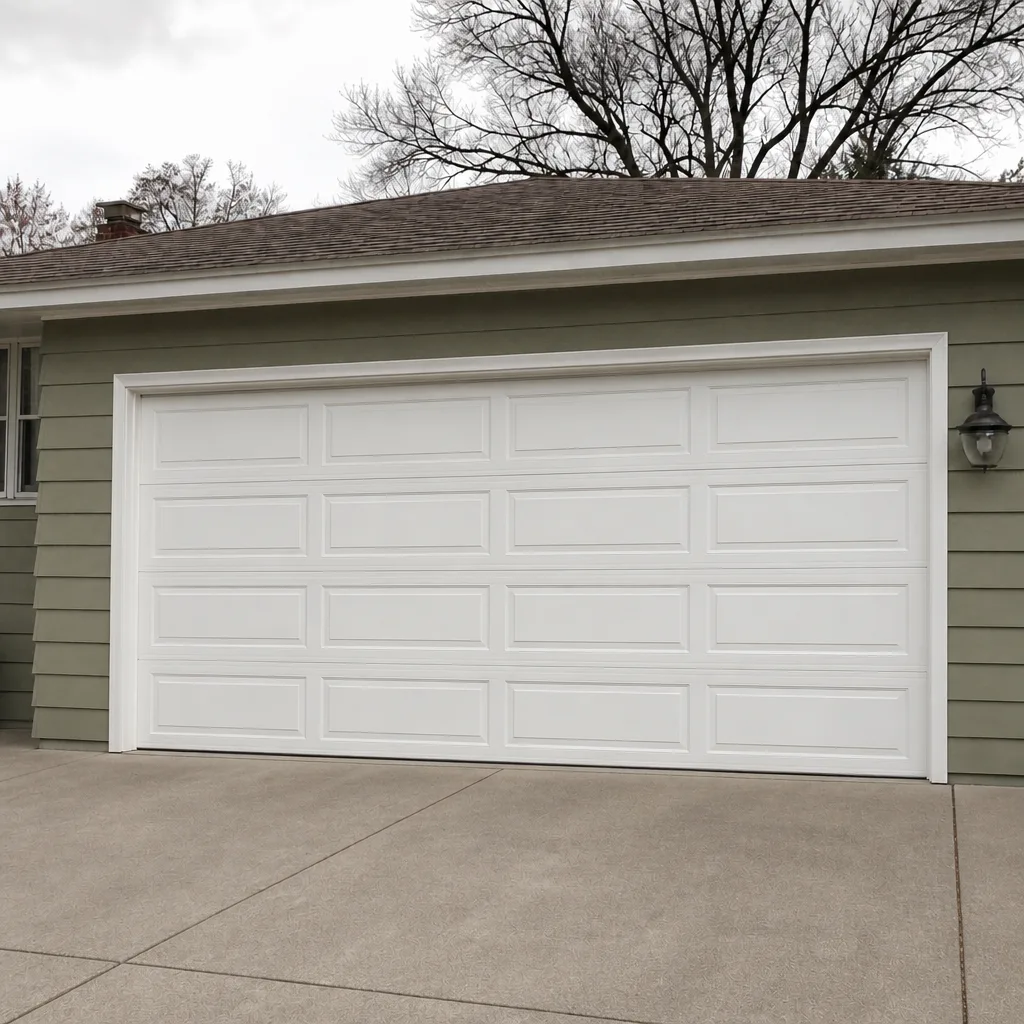 After
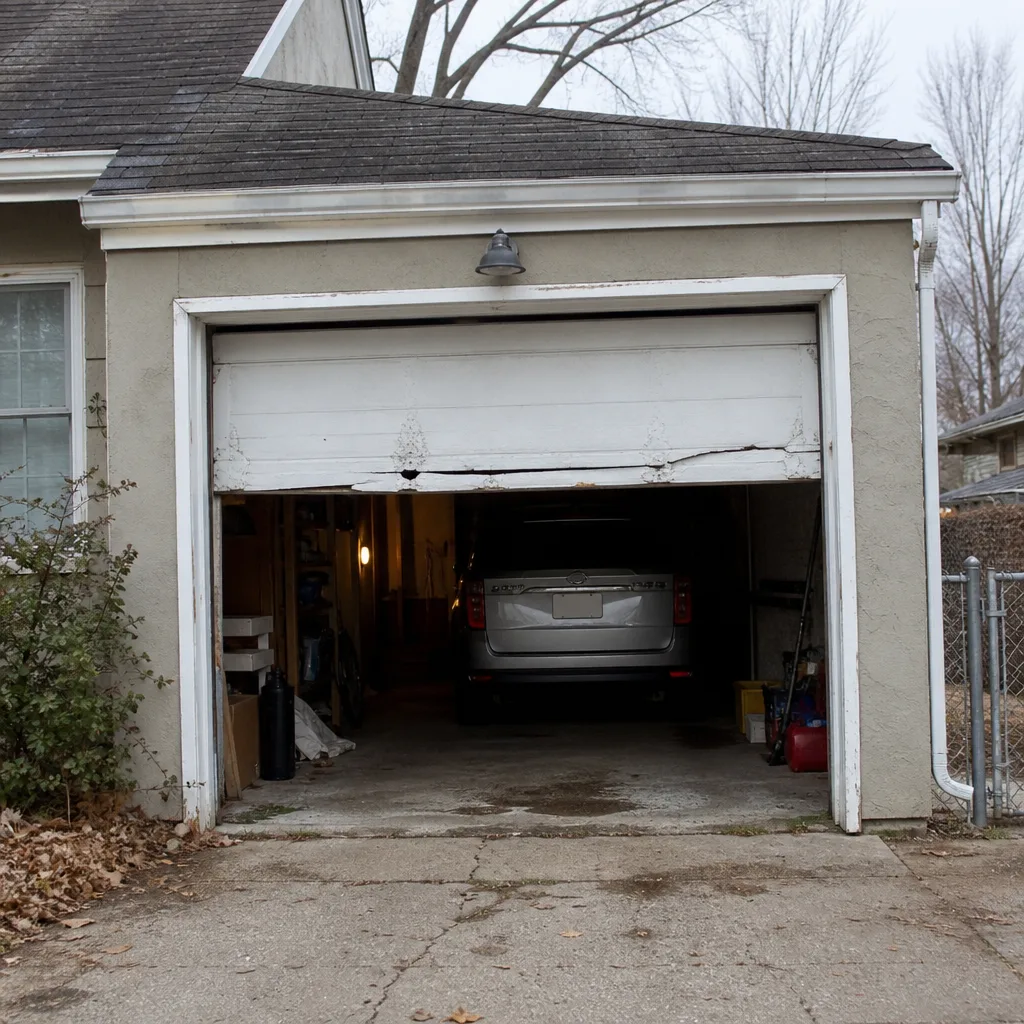 Before
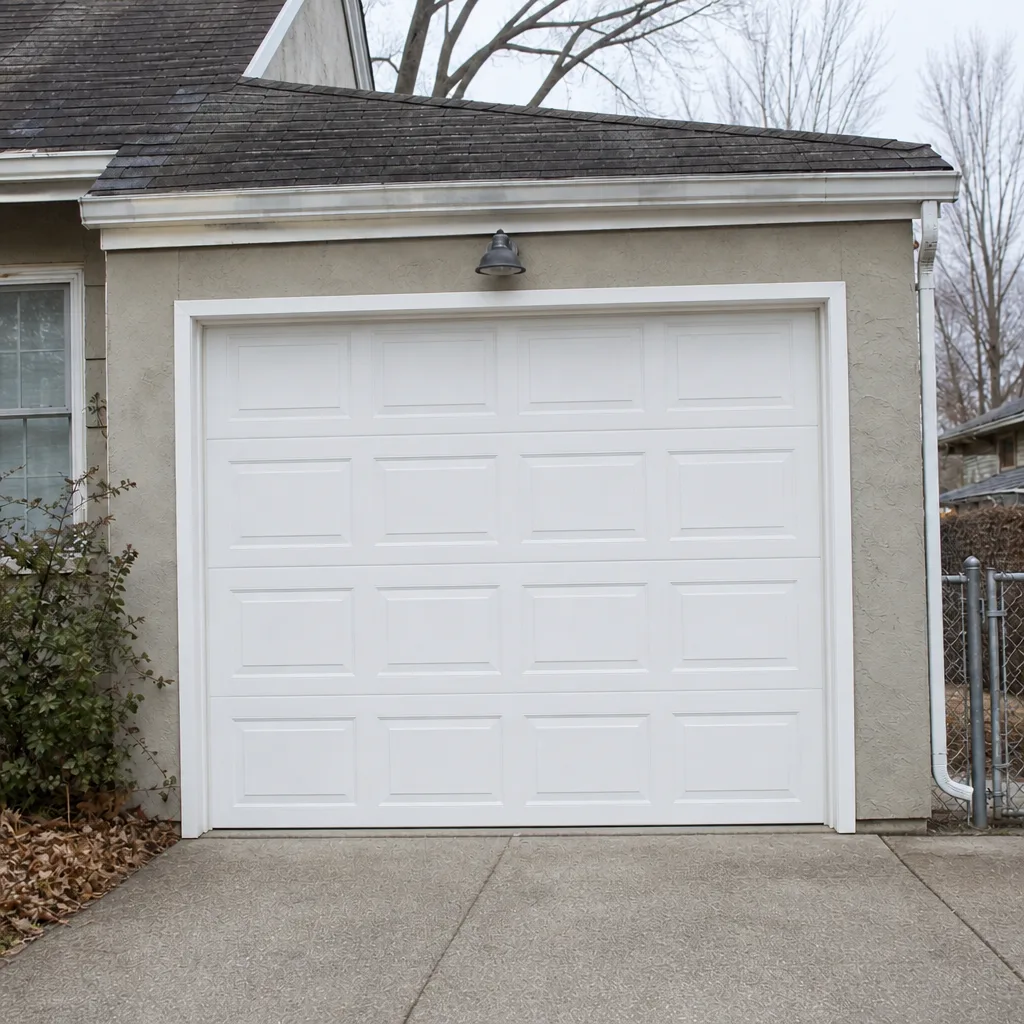 After
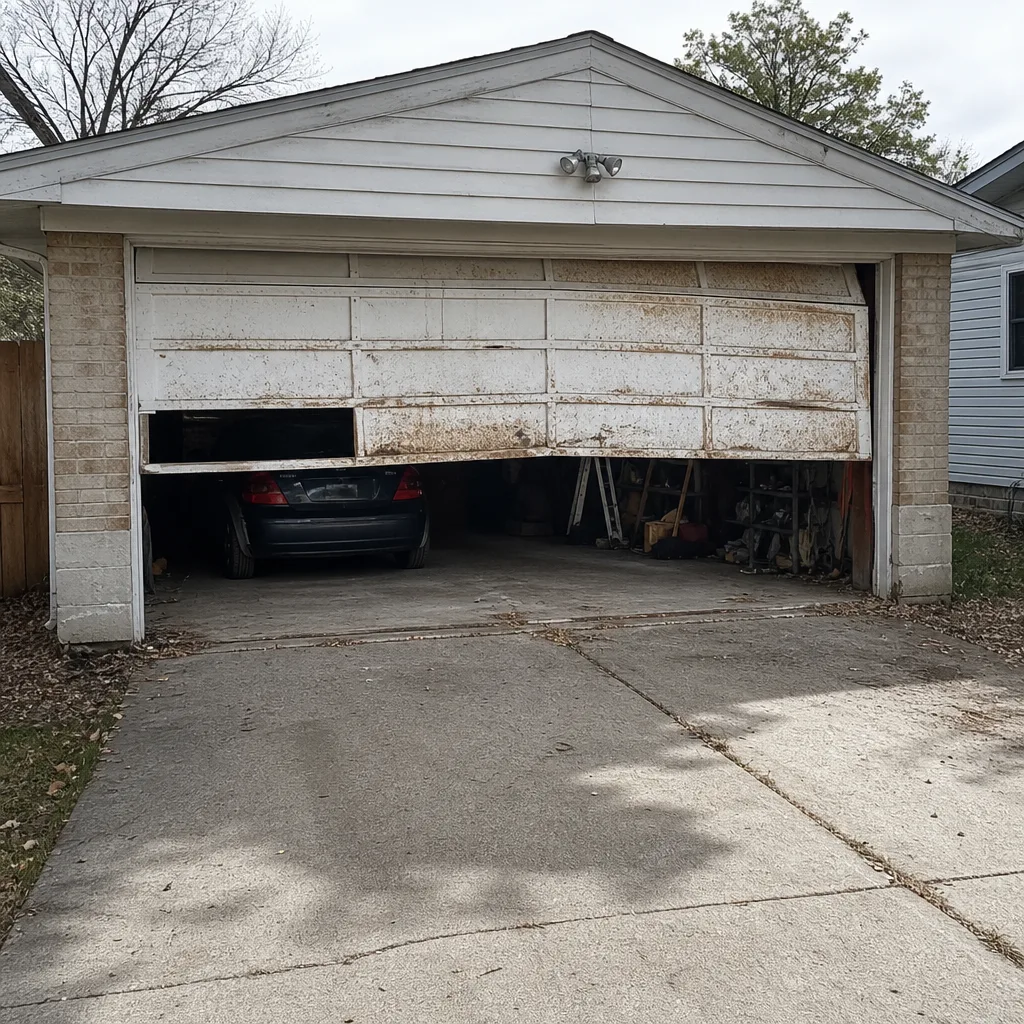 Before
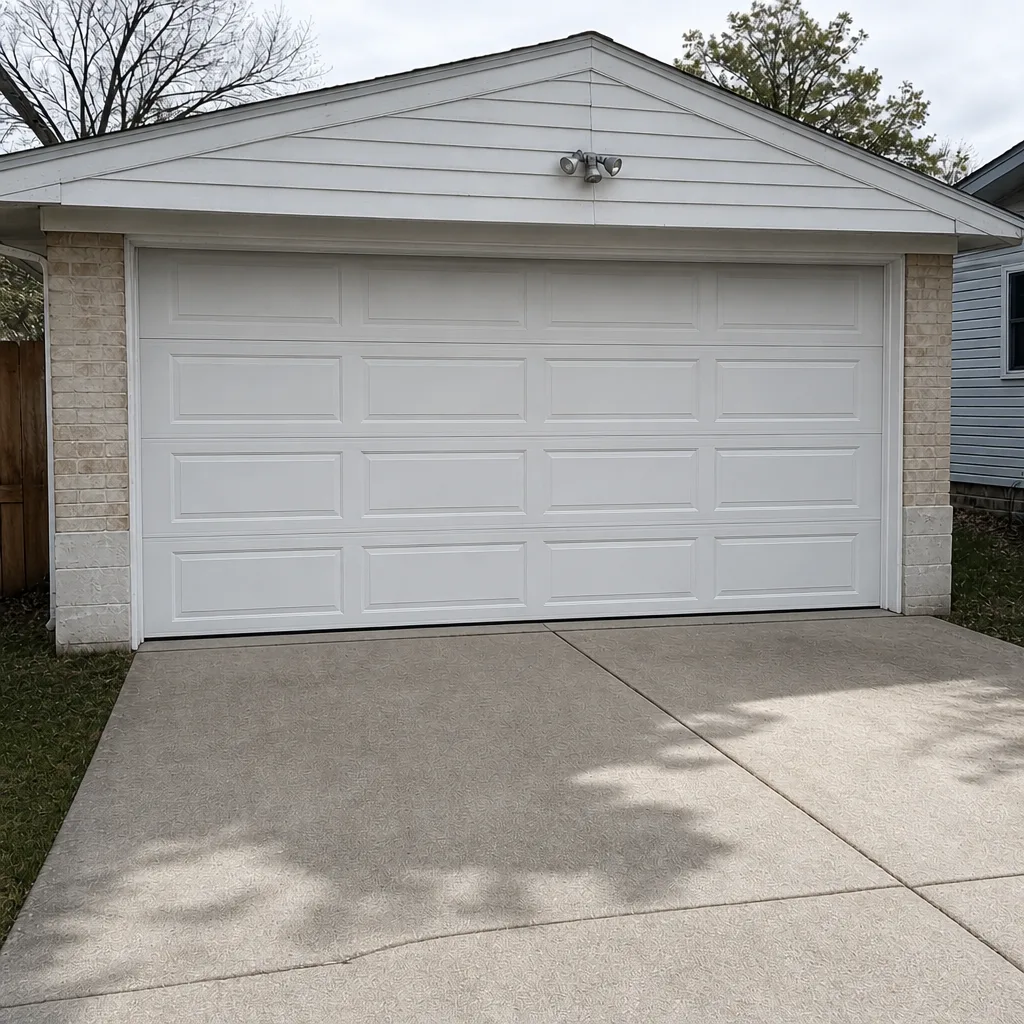 After
When to Call a Professional
Call a professional for anything involving the springs, the cables, the opener’s electrical connection, or a door you can’t safely lift. Spring and cable work is high-tension and genuinely dangerous, and it isn’t a job for a homeowner with a ladder and a video. Call us when the door won’t close at night, when the opener reverses without an obstruction, when the photo-eyes are misaligned, or when you’re planning a full replacement with a permit and inspection to coordinate. We also want the call before you order a door, so the permit path and HOA rules get settled first. Maplewood Garage Door Repair Pros offers free estimates in Maplewood. Call (855) 550-7783 and we’ll walk through what your project needs.
Frequently Asked Questions
A full garage door replacement in Maplewood generally requires a building permit, while a like-for-like repair (spring, roller, panel replacement on the same opening) typically does not. The City of Maplewood’s building department is the authority on your specific project, so call them to confirm before you order. This is the single most important call to make at the start of a replacement. Call (855) 550-7783 for a free estimate on the door and installation.
An inspector checks the door’s fire rating on an attached garage, the attachment and hardware, and the opener’s safety features under UL 325. That means photo-eyes present and aligned, safety reverse working, the manual release accessible, and the door balanced. Any of these findings can hold up a permit sign-off. Call (855) 550-7783 if you want a free assessment before the inspection.
The permit requirement is a code rule, not a local custom, so a neighbor’s unpermitted door doesn’t change what’s required for yours. Unpermitted work can surface during the title insurance and disclosure phase at resale regardless of how long ago it was installed. It’s a common reason a seller ends up pulling an after-the-fact permit. Call (855) 550-7783 for a free estimate and a clear scope of what your project needs.
A like-for-like opener swap on existing wiring typically doesn’t require a permit, but an upgrade that involves new electrical runs or a dedicated circuit generally does. The electrical portion gets reviewed separately from the door, so the answer often comes down to whether wiring is changing. Call (855) 550-7783 for a free estimate and we’ll help you sort out the scope.
HOA rules in Maplewood’s planned developments can be stricter than city code on color, style and material, and they’re enforced through deed restrictions rather than the building department. A door that passes inspection can still be rejected by the association’s review committee. Get approval in writing before ordering. Call (855) 550-7783 to discuss the door options that fit common association rules.
Unpermitted work can complicate the sale during the title insurance and disclosure phase, and buyers or lenders may ask for confirmation of compliance. The usual resolution is an after-the-fact permit and an inspection, which costs time rather than creating a permanent problem. Getting the permit correctly at the time of installation avoids that entirely. Call (855) 550-7783 for a free estimate on a compliant replacement.
The Bottom Line
Most garage door work in Maplewood is repair and doesn’t need a permit. The line sits at full replacement and at opener upgrades that touch the electrical, and that’s exactly where a lot of projects land. Confirm the scope with the City of Maplewood building department, get the HOA rules in writing if your development has them, and let a qualified technician handle the springs, the opener and the inspection prep. The paperwork is the part that protects you at resale and with your insurer, and it’s the cheapest part of the project if it’s done at the right time. Everything else follows from getting that first call right.
If you’re planning a replacement or an opener upgrade in Maplewood, call (855) 550-7783 for a free estimate and a written price before any work begins. Our technicians have up to 9 years of experience and work on the brands in your garage, including LiftMaster, Chamberlain, Craftsman and Raynor.
Written by the team at Maplewood Garage Door Repair Pros.